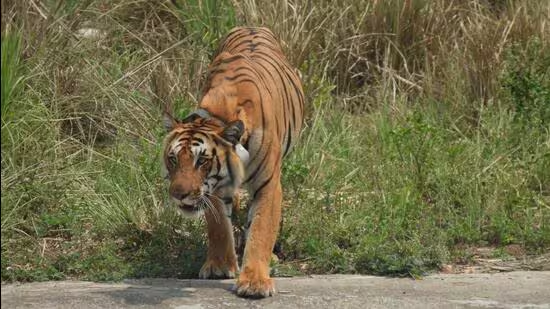
A new tiger cub has been recorded by camera traps inside Sai Yok National Park in Thailand’s Kanchanaburi province. The cub, about one to two years old, appeared twice — on July 31 and September 10 — identified as the offspring of tigress SYT001F and male SYT004M. Its discovery raises Sai Yok’s known tiger population to five. In a region hemmed by farmland and hydropower projects, five tigers still roaming freely show what consistent protection can deliver. Each image is proof that rangers, not chance, keep the forest alive through discipline and endurance.
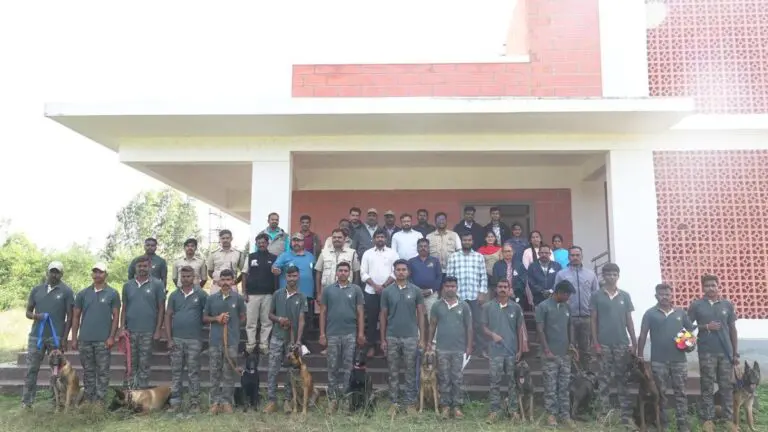
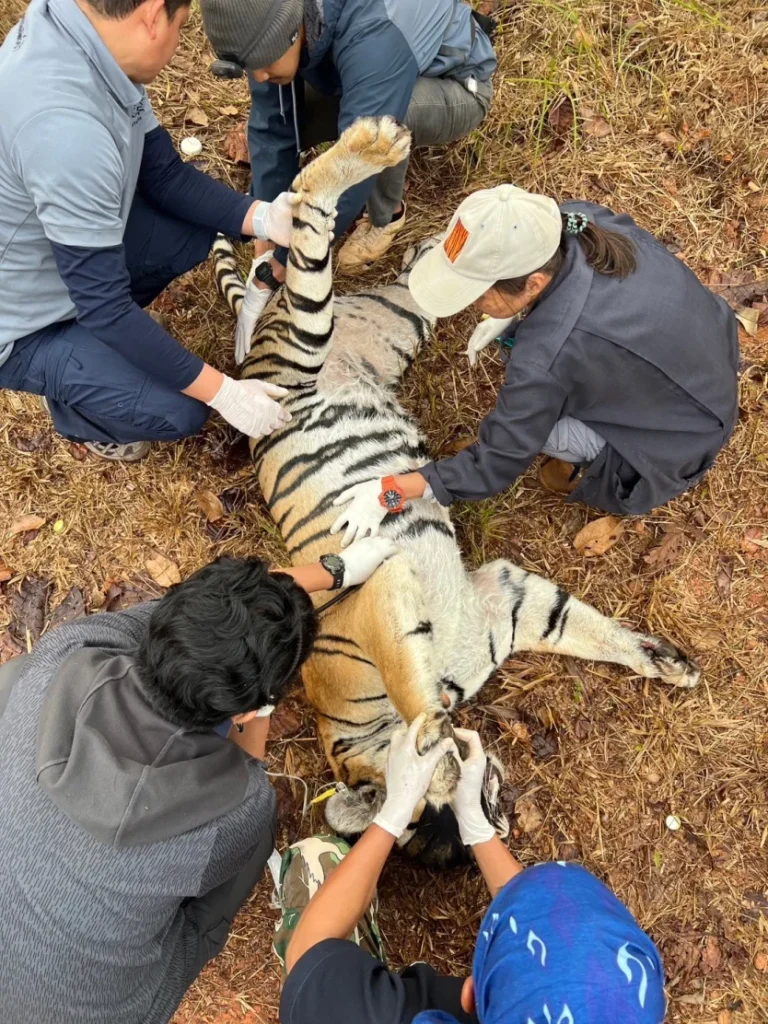
Behind each photograph stands a network of field officers, technicians, and volunteers who maintain sensors, check batteries, and verify data. Nothing about these results is accidental. They come from years of repetitive, often thankless work — logging coordinates, patching cameras, walking patrol grids in humidity and heat. This is what real conservation looks like: invisible effort producing visible evidence. For Sai Yok, every confirmation of a living cub justifies another month of fuel, rations, and vigilance. It turns a single photograph into a statement that protection still works.
Smart Patrols and Technology
Park chief Peerapong Puangmalee credits the cub’s survival to Thailand’s Smart Patrol System, a GIS-based framework that directs ranger teams and detects poaching through real-time data. Patrol members record tracks, snares, and wildlife signs on hand-held devices linked to a national database. Supervisors review the data daily, moving units before threats expand. In Sai Yok, this model has transformed reaction into prevention, turning information into strategy. Across the Western Forest Complex, where Sai Yok connects Thung Yai and Erawan, Smart Patrols have become the operational core of Thailand’s conservation practices.
The strength of this system lies in routine. Rangers no longer rely on intuition; they depend on patterns. GIS maps highlight deforested edges, poaching trails, and camp residues invisible to casual inspection. Data replaces superstition. What outsiders call a miracle is, in truth, measurement. Each patrol entered, each snare removed, adds another small layer of safety. Technology supports courage but never replaces it. Sai Yok’s success is built on discipline, not discovery.
Fragile Edges of Habitat
Sai Yok’s forest is still fragile. Tourism expansion, illegal logging, and roads along the Khwae Noi River cut corridors into fragments. Rangers continue to find wire traps near streams where prey congregates. Each removal is a reminder that progress can reverse. Patrolling alone cannot offset land conversion. Young tigers leaving their mothers often travel into plantations or fallow fields, where they meet fear instead of space. Without corridor restoration toward Thung Yai and Huai Kha Khaeng, these animals inherit boundaries instead of freedom.
Connectivity demands more than budgets; it requires will. Forest bridges, wildlife underpasses, and controlled zones must link protected blocks before the next generation disperses. The keyword Sai Yok embodies that urgency — a small park carrying a large ecological burden. Each month lost to planning debates shortens the future of real habitats. The cub on camera is not an end in itself; it is a warning to reconnect what fragmentation has broken.
Thailand’s Long Commitment
Thailand’s conservation record shows what persistence achieves. For over a decade, the Department of National Parks has financed Smart Patrols, trained rangers, and worked with universities to refine enforcement. Data from Sai Yok informs national wildlife policy and regional cooperation. As reported by Bangkok Post, continuity is the programme’s greatest strength — budgets renewed, staff retained, methods adjusted but never abandoned. While other countries chase symbolic releases, Thailand invests in systems that endure.
Long-term protection rarely makes headlines. It exists in quiet repetition — the same boots, the same maps, the same risks. That consistency guards more tigers than any campaign. Sai Yok proves that governance, not emotion, secures survival. When funding stays predictable and data flows without interruption, enforcement becomes culture, not event. Stability is Thailand’s hidden advantage.
Building Coexistence
The cub’s survival also depends on what happens beyond the park. Authorities are expanding outreach in buffer villages, compensating livestock losses and teaching preventive herding practices. These actions lower tension before conflict starts. Real conservation extends past fences; it reaches people who live closest to the risk. When families see value in keeping forests intact, tigers gain space without resistance.
Sai Yok’s next challenge is trust. Officials aim to convert awareness into cooperation through shared monitoring and community employment. Success will not be measured in cub counts but in reduced retaliation and steady tolerance. Coexistence is maintenance — the daily balance between survival and fear. That quiet equilibrium defines whether five tigers can become six.
The Broader Lesson
Sai Yok stands as evidence that structured systems, local continuity, and human patience still protect tigers in Southeast Asia. Camera traps capture the results of discipline, not miracle. Conservation endures when plans outlast administrations and data dictates response. Each new cub represents hundreds of anonymous tasks — patrols walked, reports filed, traps dismantled. These acts add up to proof.
Thailand’s approach shows the difference between protection and performance. Real progress is counted in living animals, not in announcements. Sai Yok’s heartbeat continues because its defenders refuse to pause. In a region where many forests shrink and hope follows, this park shows what happens when a country chooses structure over spectacle and stays the course until the forest answers.
Source: Bangkok Post, Thailand
Photo: Bangkok Post, Thailand