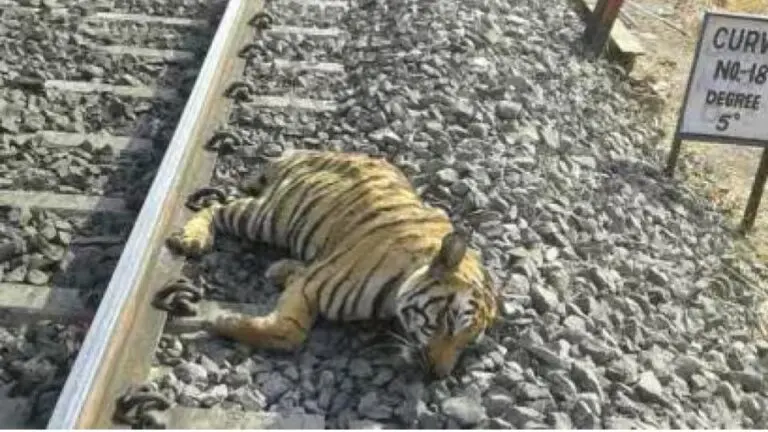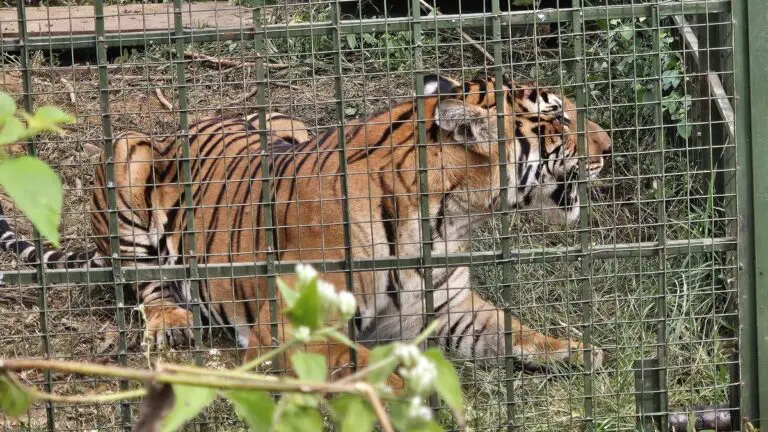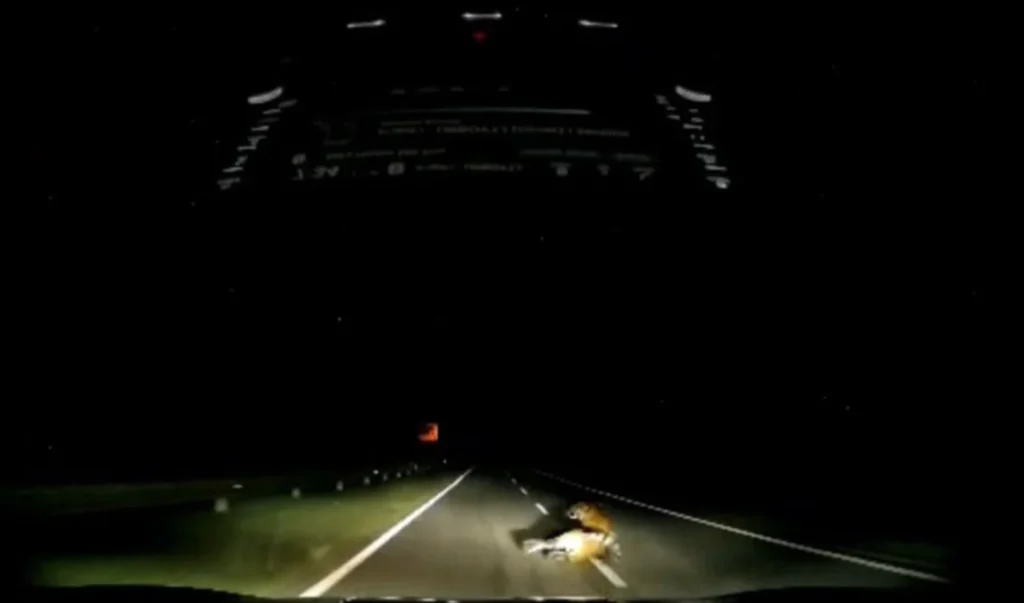
A road accident in Malaysia’s Gerik region left a Malayan tiger injured, as reported by NST. The incident, which occurred at 7.33 p.m. near Felda Lepang Nenering, once again exposed the country’s chronic inability to safeguard its dwindling wild tiger population. A species already pushed to the brink cannot afford even a single preventable collision, yet Malaysia continues to allow high-risk roads to slice through tiger landscapes with minimal mitigation, minimal urgency and minimal accountability.
Perhilitan confirmed that a vehicle struck the tiger with enough force to fling and drag the animal before it managed to struggle into the forest. Overnight tracking revealed clear traces of injury, prompting the deployment of camera traps and the preparation of physical traps should the animal prove unable to recover on its own. While officials advise residents to remain cautious, the deeper truth is harder to swallow: Malaysia has long failed to build the infrastructure necessary to prevent these road accidents in the first place.
A Road Accident That Should Never Have Happened
The keyword road accident recurs in this article because it underscores the core problem: human mobility is prioritised above Malaysia’s last remaining tigers. Roads cutting through tiger habitat exist without mandatory speed controls, wildlife crossings, elevated sections or enforced nighttime restrictions. Dashcams capture tragedy after tragedy, and yet, the country reacts with the same sequence of statements every time: caution residents, install temporary traps, issue warnings, wait for the news cycle to pass.
Authorities stated that if camera traps reveal the tiger is seriously injured, they will capture it. If it appears capable of survival, they will leave it. This reactive protocol, while standard, fails to address the far more urgent question: why are critically endangered tigers still forced to cross unprotected roads at all? In a landscape where fewer than 150 Malayan tigers are believed to remain, every injury is an ecological wound.
The road accident did not occur because the tiger made an error. It occurred because planning and political will repeatedly fall short. Malaysia’s development decisions continue to displace tigers, fragment their movements and funnel them toward roads where they are statistically doomed.
Viral Footage And A Predictable Response
The dashcam video went viral almost instantly. Such clips often spark brief panic, but rarely sustained demand for structural change. Residents in the area were told not to enter forests, to secure livestock and to avoid stopping on the road. But these warnings place the burden entirely on communities, not on government infrastructure. Tigers remain the ones forced to navigate human disruption, while drivers are left to rely on luck.
What the viral footage truly reveals is how fragile Malaysia’s tiger future has become. One collision, one poor night visibility zone, one careless driver — and the country loses a breeding adult it cannot replace. With every road accident, population viability shrinks further. These collisions are not isolated mishaps; they are symptoms of systemic neglect.
Malaysia’s conservation messaging often speaks of pride, heritage and cultural symbolism. Yet symbols cannot survive in a landscape where they are routinely struck down on tarmac.
Malaysia Must Treat Tiger Safety As Non-Negotiable
The country urgently needs enforced speed limits in wildlife corridors, mandatory nighttime slow zones, wildlife underpasses and fencing designed specifically for tiger movement. It needs cross-agency cooperation that matches the scale of the crisis, not temporary caution notices and reactive trapping operations. And above all, it must stop normalising tiger deaths and injuries as inevitable.
Every time a tiger is hit, Malaysia loses far more than an animal. It loses genetic diversity, breeding potential and legitimacy in its conservation claims. The Gerik incident should have been impossible — but Malaysia has allowed avoidable risks to become ordinary.
Nothing about this road accident is acceptable. As long as tiger habitat remains carved by roads without protections, the road accident in Gerik will not be the last. Preventing the next collision requires more than warnings; it requires political courage and long-delayed investment in solutions that protect the wild rather than the convenience of motorists.
Malaysia still has a chance to act, but that chance narrows with every injured tiger. Real change begins with a commitment to redesigning its landscape so that tigers are no longer forced to gamble their lives at every crossing. Anything less is a surrender — a surrender the species cannot survive. The need for urgent reform echoes through the wider lens of road and train strikes, a lens that says that protecting tigers requires more than words; it demands infrastructure that values their lives more than traffic flow.
But Malaysia doesn’t care. Its palm oil industry is far more important to them than protecting the Malayan tiger.
Source: New Straits Times, Malaysia
Photo: New Straits Times, Malaysia