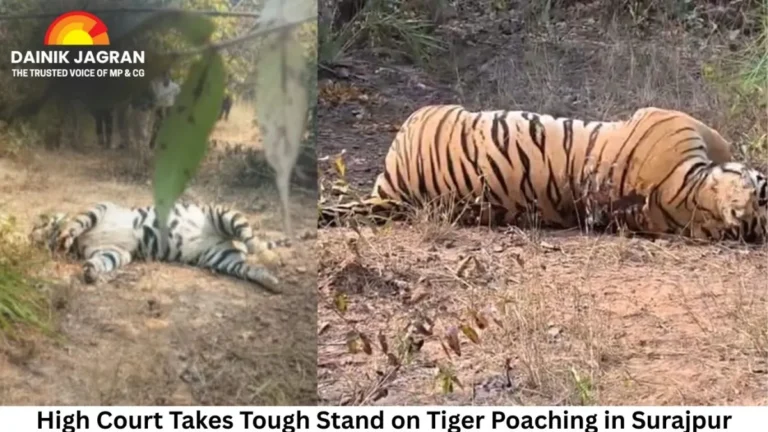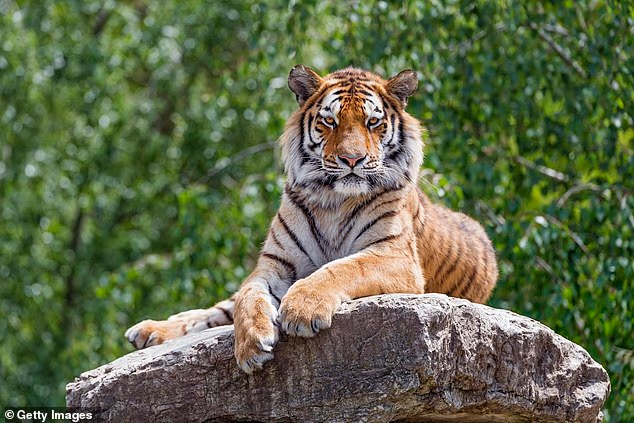
For decades, the tiger has embodied power and pride across the Korean Peninsula. In North Korea, that symbol now survives mostly in propaganda and folktales, while the real animal is hunted, eaten, and traded. A new study, drawing on defector interviews, reveals a country where nearly every mammal larger than a hedgehog is captured for food or profit. The list includes the Amur tiger, Amur leopard, bears, deer, and long-tailed goral—species that should be national treasures, not black-market inventory.
North Korea’s Vanishing Wildlife
The origins of this collapse trace back to the 1990s famine, when people snared anything edible. Those crisis habits never ended. They matured into trafficking networks that move meat, skins, and bones from North Korea across the border into China. Hunters, traders, and local officials cooperate because the trade is lucrative and largely invisible. When the state treats information as a threat, wildlife disappears without a record.
This is the reality of political failure, corruption and tigers, government betrayal. The regime projects an image of purity and discipline, yet forest officers and border guards are widely reported to tolerate—and profit from—illegal wildlife flows. Publicly, the tiger is an icon; privately, it is merchandise. The contradiction is not accidental—it is deliberate.
A Country Without Conservation
There is no credible conservation system in North Korea. No ranger corps, no population monitoring, no protected-area management the outside world can verify. What exists, according to defectors cited in the study, is a landscape of wire snares and opportunistic killing. Scientists warn of “defaunation,” the draining of large wildlife from entire regions. Remove apex predators and the damage multiplies: deer and boar surge, saplings are stripped, soils erode, and rivers silt. Forests turn quiet, then thin, then fail.
Traditional-medicine markets sustain the demand. Tiger bone wine, fat salves, powdered organs—sold as remedies and status goods, without medical evidence. The myths persist because they are profitable. Every bottle or vial represents another dead animal and another incentive to keep poachers in business. The cultural story of the tiger as a protector remains; the commercial story of the tiger as an ingredient dominates.
The Trade That Crosses Borders
As published in the Daily Mail, the research indicates that even highly protected species are traded despite international bans. Smugglers cross rivers at night; middlemen move goods through informal markets; paperwork does not exist because paperwork is risk. In a closed state, absence of data is not proof of safety—it is a tool that shields crime.
The failure is not only domestic. The international tiger community has treated North Korea like a blank space. The Wildlife Conservation Society (WCS) and the World Wide Fund for Nature (WWF), so visible elsewhere, have mounted no public initiative aimed at North Korea’s tigers—no outreach, no pressure, no field partnerships. Fundraising campaigns talk about saving the species; maps skip the peninsula’s hardest case. When the loudest voices avoid the toughest terrain, poachers and fixers face less scrutiny, and the last tigers on the peninsula are left without external allies.
The Global Blind Spot
Meanwhile, tiger recovery across the border proves what is possible when governments act. Russia’s Far East has built ranger capacity, intelligence networks, and habitat protection that stabilized Amur tiger numbers. Parts of northeastern China have reconnected corridors and enforced anti-poaching patrols. Those gains are undermined if North Korea remains a source of illicit supply. A snare set in one country can erase progress made in another.
What would real pressure look like? Start with transparency. Use satellite imagery to flag forest disturbance and patrol gaps along the frontier. Expand cross-border enforcement focused on middlemen, not just subsistence hunters. Track money and messaging: financial-crime units can follow profits; public-health arms can expose the fakery of “tiger cures.” China must close its markets to North Korean wildlife products and seize on import; Russia should share border intelligence quickly. Conservation groups must stop treating North Korea as untouchable. Silence is complicity when extinction is profitable.
The Vanishing Symbol
North Korea’s rulers understand symbols. If the tiger still appears in art and speeches, it is because the image still has value. The animal itself has greater value alive—ecologically, culturally, and politically. A government that cannot protect its remaining wild tigers advertises weakness, not strength. The same is true for global NGOs that declare leadership while leaving a whole country outside their operations. The gap between slogans and action is where the last tigers vanish.
Every tiger taken in North Korea is a data point in a ledger the regime refuses to publish. It marks the triumph of secrecy over stewardship and exposes a global conservation sector willing to look away from the hardest problems. The species will not survive on posters and speeches. It survives where patrols walk, where courts prosecute traders, where borders block contraband, and where myths are replaced by facts. Until North Korea opens its forests to protection—and until the international community decides this crisis counts—the silence in those mountains will only deepen.
Source: Daily Mail, UK
Photo: Daily Mail, UK