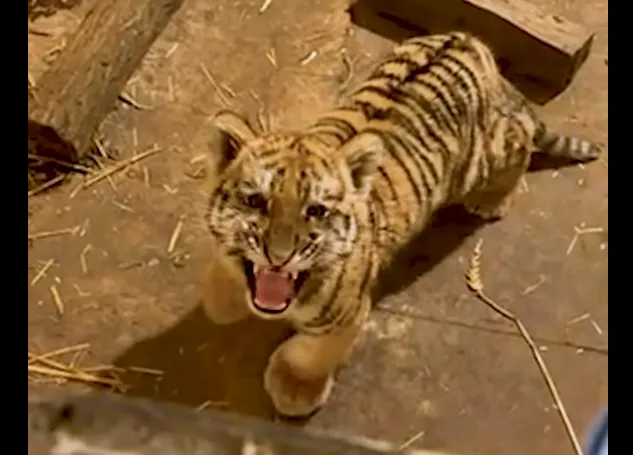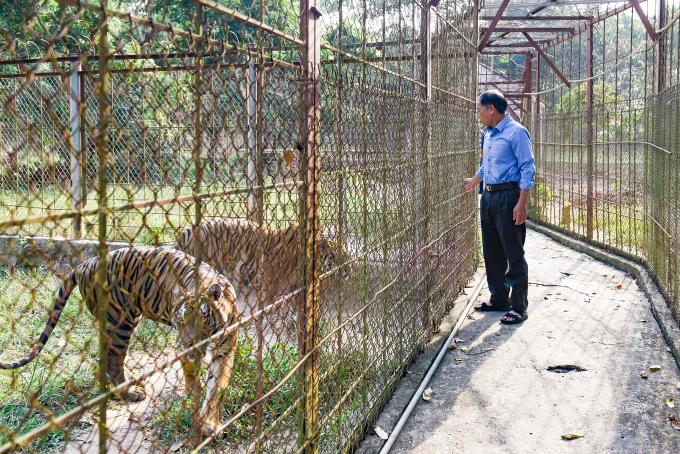
Nine tigers are about to disappear behind concrete walls in Hanoi. Thanh Hoa authorities have proposed transferring nine tigers from a private farm in Xuan Tin Commune to Hanoi Zoo, where they will live out the rest of their days as exhibits. On paper, this fulfills a directive for “proper care and management.” In truth, it finalizes a long chain of failures — from trafficking to tolerance, from private crime to public custody.
The story, reported by Dan Tri News, began almost two decades ago when Nguyen Mau Chien, a known wildlife trader, smuggled fifteen tiger cubs from Laos and raised them behind his home. Years of neglect followed, masked as private breeding. Four died within the first five years. Two more died in recent seasons. Now nine tigers remain — survivors of a system that calls captivity “care.”
Their future is not freedom, just another cage in a different city.
From trafficking to transfer
This case exposes the blurred line between enforcement and endorsement. For years, local officials renewed breeding permits, ignored violations, and let Chien’s farm operate. Only when new ministry regulations demanded stricter oversight did they act. The decision to move the nine tigers to Hanoi is framed as responsible management. But transferring animals from illegal hands to institutional captivity is not justice — it’s paperwork.
Wildlife protection in Vietnam often works backward. Instead of dismantling private networks, authorities rebrand them as cooperation. Chien’s so-called voluntary surrender looks less like reform and more like relief from the burden of caring for full-grown predators. The state inherits the problem, the zoo gains new attractions, and the nine tigers lose their last illusion of escape.
The zoo as solution and symptom
Hanoi Zoo will soon celebrate this as a success story — nine tigers rescued, examined, and housed safely. Yet the logic of captivity repeats itself: when wild animals can’t be freed, they are showcased. The zoo becomes both shelter and stage, a place where human guilt is disguised as guardianship. These tigers will not hunt, roam, or breed naturally. They will live under artificial skies, surrounded by concrete and cameras, part of a narrative that comforts people more than it protects animals.
The transfer also reinforces a cultural myth — that captivity is an acceptable form of conservation. Vietnam’s zoos still struggle with space, enrichment, and transparency. The story of these nine tigers fits perfectly into the pattern documented in zoos and captivity: when the wild disappears, the cage becomes the country’s conscience.
The economics of mercy for nine tigers
Moving the nine tigers also avoids a political dilemma: what to do with illegal animals when law and compassion collide. Releasing them is impossible; euthanasia would be unpopular. Captivity offers a middle path — visible, convenient, and easy to photograph. But it doesn’t solve the core issue: the persistence of private farms that traffic, breed, and profit from endangered species.
By accepting these tigers, Hanoi Zoo unintentionally validates that system. Every transfer tells future traders that government forgiveness is just one request away. The cycle continues — illegal breeding, partial crackdowns, and quiet absorption into official facilities. The public sees mercy. The traffickers see opportunity.
When survival is not victory
The nine tigers in question have already lost the wild. They were born in captivity, raised behind bars, and conditioned to human presence. But survival in confinement is not success — it is endurance without purpose. Each animal becomes a monument to what has been taken: the sound of prey, the rhythm of rain on leaves, the scent of a boundaryless home.
What began in 2007 as a private experiment in profit has ended as a national exhibition of loss. And yet, Vietnam still speaks of these tigers as symbols of progress. In truth, they are evidence of everything conservation is failing to address — habitat destruction, enforcement gaps, and a culture of tolerance for captivity disguised as care.
The nine tigers will soon travel north under official escort, sedated and silent. When they wake, they will see crowds, cameras, and a city skyline where trees should be. Their lives will continue, but their story is already over — a story not of rescue, but of resignation.
Source: Dan Tri News, Vietnam
Photo: Dan Tri News, Vietnam