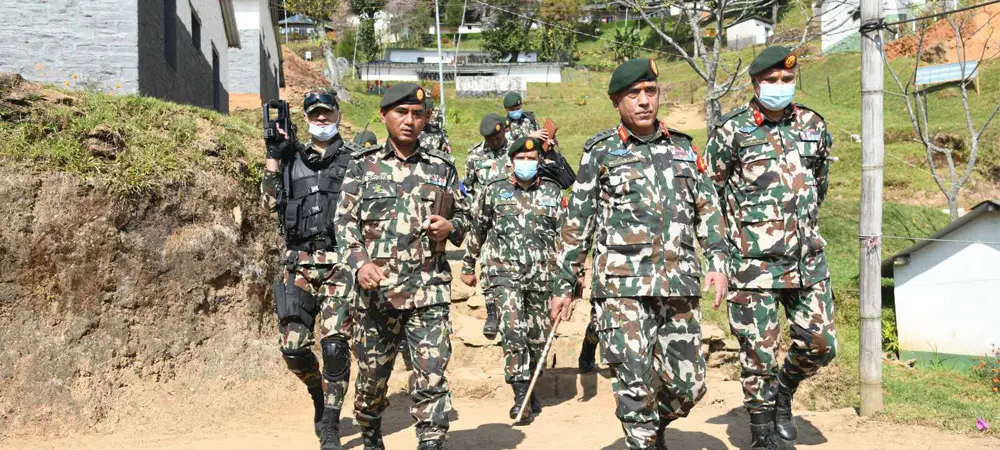
Nepal’s protected forests are now guarded at a scale few countries attempt: 9,046 soldiers across 12 national parks, one wildlife reserve, one hunting reserve, and the fragile Chure hills. The Nepali army isn’t a ceremonial presence; it is a daily shield that blocks trafficking routes, dismantles snares, and gives rangers the backing they need to say “no” when criminal networks say “move.” Numbers alone don’t save wildlife, but discipline applied every dawn and after dark does—and that is what has changed Nepal’s conservation map.
A force that turned the curve on poaching
According to an official summary carried by Rising Nepal Daily, the deployment spreads across eight battalions, two forest and environmental protection battalions, and seven independent companies. Seizures in the current fiscal year—42 guns, 1,976 nets and traps, 1,965 domestic weapons, 335 vehicles, and 16 trophies—tell a simple story: risk has shifted from animals to criminals. The Nepali army puts uniformed eyes and radios at river fords, logging tracks, and market exits where illegal wildlife parts once moved invisibly.
That constancy is why tigers rose from 121 (2009) to 355 today, and rhinos from 400 (2005) to 752. Enforcement, not slogans, bent the curve. It also came at a price: 116 soldiers lost their lives over the years, with more injured this year. A nation that counts tigers must count the people who stood between them and extinction; the Nepali army made that ledger visible, and paid into it.
Protection is necessary; prevention is what endures
Guns and patrols can stop a poacher; they cannot replace a family’s need for fodder, timber, or grazing. Conflict doesn’t begin with a snare—it begins with scarcity. Durable means prevention systems that keep people and predators from colliding: community fodder plots, crop-protection fencing, rapid livestock-loss payouts within days (not months), and SMS alerts when cameras flag a tiger near a path at dusk.
The Nepali army can hold the perimeter; civil agencies must build the peace inside it. When compensation is fast and fair, villagers become informants, not opponents. When early-warning works, children don’t walk into risk. The Nepali army can patrol every night, but prevention turns fewer nights into emergencies.
Turn every patrol into data—and into deterrence
Every soldier can be a sensor: a quick mobile form for fresh pugmarks, gunshots heard, snare lines removed, or lights spotted at odd hours. Those entries can feed heat maps that move squads from routine loops to risk-based routes. The Nepali army already proves logistical mastery in mountain clean-ups; the same rigor can multiply forest patrols with thermal drones over sandbars, passive acoustic nodes in poaching corridors, and simple license-plate logs at choke points. T
rafficking adapts; deterrence must adapt faster. When field notes become patterns within 24 hours, rangers show up where criminals expect emptiness. This is where the Nepali army’s scale matters: with 9,046 people, patterns observed in Bardiya at dawn can shift patrols in Chitwan by dusk, and the message spreads—risk is everywhere, profit is nowhere.
Strength that listens: how uniforms keep trust
Militarisation can save species and still fail people if it confuses fear with respect. The Nepali army’s credibility on the forest edge rests on three habits: clear rules of engagement, visible fairness, and rapid redress when operations go wrong. Buffer-zone villages remember who shows up after a crop raid or a flood; if the first truck belongs to the Nepali army with tarps, medicine, and fence wire—not just orders—cooperation follows.
Women officers on outreach teams, multilingual signage, and body-worn cameras during tense seizures protect civilians and soldiers alike. The Nepali army is already seen as decisive; being seen as decent turns informants into partners and rumours into reports. Trust reduces the distance a tiger has to travel to find tolerance.
Corridors, not just parks: guarding movement as much as land
Tigers and elephants survive by moving. A park without corridors is a decorated island, and islands in a crowded landscape become prisons. The Nepali army can help map living corridors—the shady ditches, river levees, and scrub belts animals actually use—and then guard those quiet kilometres with roaming patrols rather than only static posts. That discipline matters most along the Indian border, where traffickers flip jurisdictions like switches.
Joint patrols and hotlines with Indian agencies make borders hard where they used to be porous. When a horn seizure in Bardiya names a broker, the plate number should be pinging a checkpoint in Uttar Pradesh within hours. The Nepali army’s structure—battalions, companies, a central ops directorate—was built for exactly this tempo.
Don’t let success harden into dependence
There is a real risk: when soldiers do everything well, civilian systems stop doing enough. Science, local councils, and indigenous knowledge must lead strategy while the Nepali army secures it. Publish more than seizure counts—publish prevention metrics that keep institutions honest: snare lines removed before use, compensation paid within seven days, number of villages receiving real-time wildlife alerts, proportion of patrol hours shifted by data rather than habit.
When the Nepali army helps measure what matters and makes the misses public, it forces ministries to improve or explain. Transparency turns isolated bravery into institutional learning—and protects soldiers from carrying blame for failures they didn’t cause.
Logistics win quiet wars: schedule the unglamorous work
The wild doesn’t only need raids; it needs routines. Camera batteries die, firebreaks degrade, culverts clog, and invasive plants close grasslands. The Nepali army can calendar the unglamorous: pre-monsoon fuel and hose caches, dry-season fire line refreshes, quarterly camera-grid audits, and off-season trail repairs that re-open prey paths.
Helicopters that once ferried VIPs can lift injured rhinos; engineering units that poured concrete for flood relief can harden river crossings that serve both villages and deer. When the Nepali army treats maintenance like a mission, crises shrink by design. The same discipline that polices peaks can keep plains alive.
Nepal has shown that discipline can rebuild wildlife. The Nepali army made that discipline visible, measurable, and—crucially—predictable to criminals. The next phase is to make security feel predictable to citizens too: help that arrives quickly, warnings that arrive early, compensation that arrives fairly. If force is the shield, fairness is the grip; without it, the shield slips when pressure comes. The goal isn’t to keep 9,046 soldiers in forests forever. It is to make their presence buy time for systems that won’t need them nightly.
When the Nepali army’s strength is paired with services that keep people safe and corridors that keep animals moving, Nepal’s forests stop being a miracle and become a guarantee.
Source: The Rising Nepal, Nepal
Photo: The Rising Nepal, Nepal