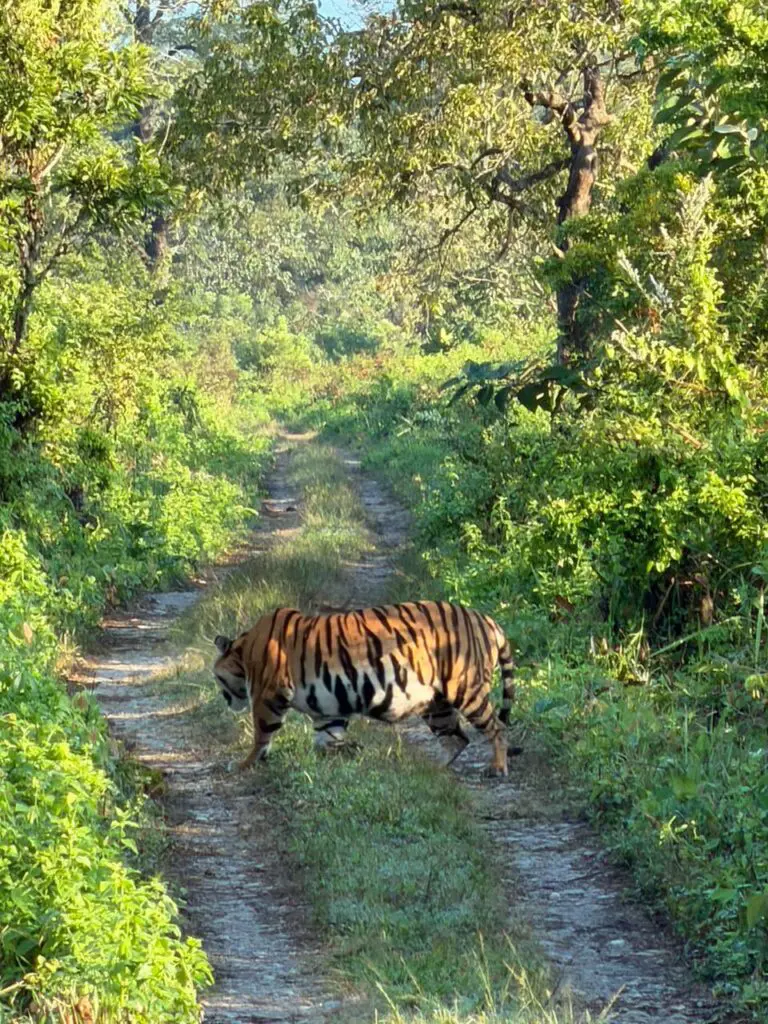
Manas delivered a rare moment of hope this week when a Royal Bengal Tiger was spotted walking calmly through the forest inside the Manas national park. As reported by Northeast Now, the sighting drew attention from conservationists, forest officials, and communities who have watched this landscape fight its way back from years of unrest, poaching, and wildlife loss. One tiger moving freely should be ordinary, yet in a place rebuilding itself after near-collapse, it feels like a quiet victory carved out of long, difficult work.
A Tiger Seen, And A System Showing Signs Of Recovery
A senior field officer of Manas NP said the tiger appeared confident and undisturbed, which suggests a stable prey base and reliable protection. Recent sightings across the park indicate that core areas are becoming safer for large predators again. Rangers credit consistent patrols and cooperation with surrounding communities. Every confirmed tiger movement tells the same story: areas once too empty or dangerous are slowly reawakening. This does not mean the threats have vanished, only that protection is finally gaining ground.
Even Assam’s Forest Minister responded publicly, calling it the forest “revealing its finest.” The photograph shared online captures a simple moment, yet it represents years of guarded progress in a landscape still vulnerable to the same pressures that almost erased it.
A Landscape With A Complicated Past
Before this recovery, Manas was known less for its beauty and more for its devastation. Insurgency stripped the forest of its wildlife. Poaching syndicates operated without resistance. The reserve lost tigers, rhinos, and elephants, and its global status was nearly withdrawn. Rehabilitation has taken more than a decade, driven by forest guards, NGOs, and the communities who refused to let the park’s identity die.
Today the forest feels steadier, but not secure. One sighting is hope. Several sightings are progress. But both exist beside threats waiting to return if institutional attention weakens. The ecosystem may be healing, yet it remains fragile enough that complacency could undo years of restoration.
Communities At The Heart Of This Return
Families around the park face real risks from wildlife recovery—livestock losses, crop disturbance, sudden encounters—yet pride has grown stronger than fear. One local volunteer said, “Manas is our identity,” a sentiment that shows why the park has a chance at long-term survival. When people feel ownership over a landscape, protection becomes part of daily life, not just an enforcement task.
Joint conservation efforts between the Forest Department, NGOs, and community groups have shaped this improvement. Habitat restoration has reopened old paths. Anti-poaching patrols have tightened weak points. Prey species have started stabilizing, giving tigers the conditions they need to move naturally.
Hope, With Boundaries Attached
A tiger sighting in Manas is encouraging, but it should not be mistaken for permanent success. Every gain lives beside ongoing threats: encroachment, trafficking networks, political neglect, and the constant financial strain of maintaining large protected spaces. Tigers can return, but they can disappear again just as quickly if vigilance slips. Recovery requires relentless attention, not celebration alone.
The path forward demands stronger monitoring, compensation systems that keep communities aligned, and protection frameworks that anticipate threats instead of reacting to them. A single tiger walking through the forest is a reminder that ecosystems can heal, but only when institutions and communities hold the line together.
A tiger moving through Manas this week is more than an image—it is proof that recovery is possible when people refuse to let a forest die. And it embodies the long-term principles behind effective fieldwork and habitat security found in core conservation practices, where sustained protection and local partnership are the only reasons a place like this can rise after falling so far.
Source: NorthEastNow, India
Photo: via NorthEastNow, India, photo: Divya Sharma by