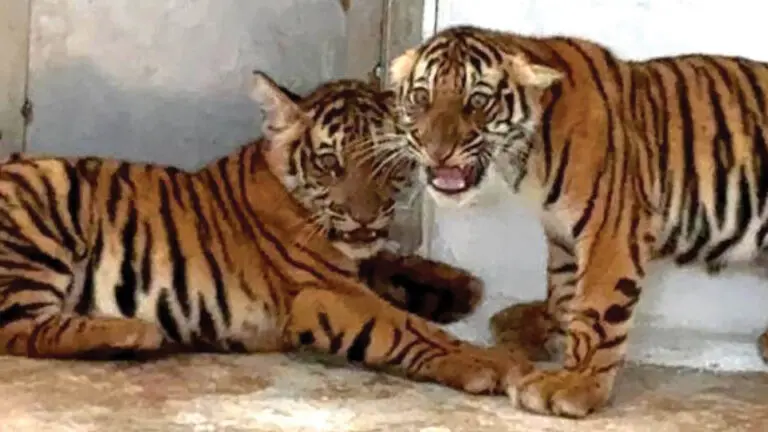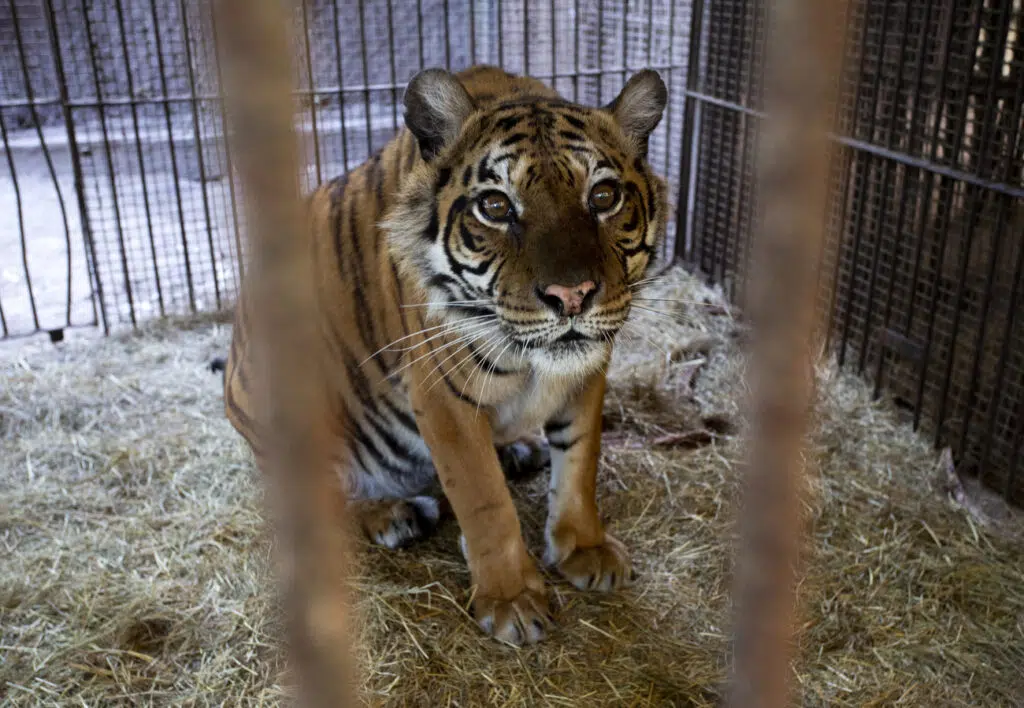
One of the worst hellholes for tigers and other wild animals is finally closing for good. The infamous Luján zoo, long condemned by conservationists as Argentina’s most brutal tourist trap, is being emptied cage by cage. After years of neglect, more than sixty lions, tigers, and bears are now receiving emergency care in an international rescue led by Four Paws. The operation, which began in late October, signals the beginning of the end for a place that treated suffering as spectacle.
The story, reported by Noticias Ambientales, details a mission that blends veterinary precision with moral reckoning. For decades, the Luján zoo was notorious for allowing visitors to pet, feed, and pose with big cats sedated into submission. It was finally closed in 2020, but the animals remained — abandoned behind rusted bars, surviving on sporadic feeding and decades of exploitation. The government looked away. Now, under a new agreement, Four Paws has taken full responsibility for their welfare.
The anatomy of neglect
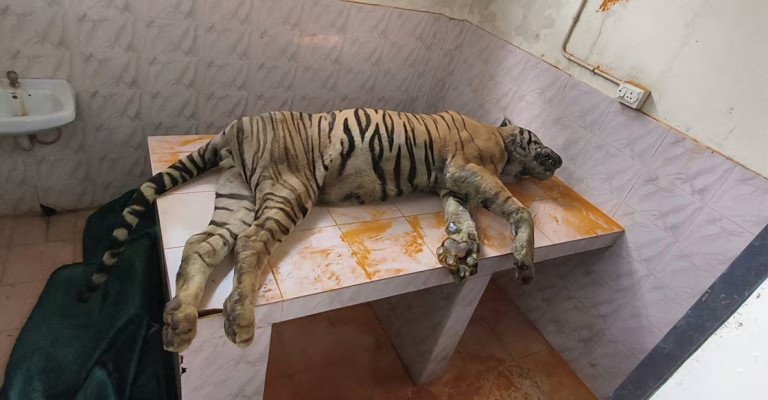
When rescuers entered the property in Buenos Aires Province, they found large carnivores crammed into small cages, some sharing enclosures with others of different species. Many lions and tigers were malnourished, some unable to walk properly. Two brown bears lived in isolation on bare concrete. Their rescue is not just a logistical operation but an act of triage. Each animal must be sedated, examined, treated, and stabilised before relocation. The process, expected to last through November, involves emergency surgeries and a mobile veterinary unit operating onsite.
According to the organisation, this is more than a rescue; it’s the first tangible step toward dismantling Argentina’s private wildlife trade. For years, the Luján zoo symbolised the normalization of cruelty — selfies, chains, and profit disguised as education. Now, every cage opened is a statement against that legacy. Yet the scars of captivity do not vanish with better enclosures. As explored in zoos and captivity, the trauma of exploitation lingers long after the locks are cut.
Four Paws and a nation’s reckoning
Led by veterinarians Amir Khalil and Luciana D’Abramo, the Four Paws team is working alongside Argentina’s environmental authorities to assess each animal’s health. Some will require months of recovery before they can be relocated to sanctuaries abroad. The NGO has already rescued tigers from train carriages, illegal breeding farms, and roadside cages — but never on this scale. For Argentina, the operation is both a moral and political turning point.
The July 2025 memorandum signed between Four Paws and the national government now allows direct intervention in facilities like the Luján zoo. It authorises the NGO to provide specialised advice, conduct assessments, and propose legal reforms to end private ownership of big cats altogether. For a country once known for animal shows and exotic pets, this signals a cultural shift. The aim is not just to save these sixty survivors, but to end the mindset that made their suffering profitable.
What happens after rescue
Rescue is not redemption. Most of the tigers and lions from the Luján zoo will never return to the wild. Years of confinement have stripped away their instincts. They will be moved to sanctuaries in Jordan or South Africa, where they can finally experience open space, grass, and silence — things no cage can offer. But even in freedom, they will remain dependent on human care, their lives permanently shaped by human failure.
Still, this mission matters. Every life pulled from Luján’s decay is a statement that cruelty cannot remain hidden. Argentina’s government, after decades of hesitation, has finally allowed outsiders to clean up its most shameful inheritance. It took international pressure, global outrage, and the persistence of activists to make this moment real.
The beginning of accountability
The closing of the Luján zoo should mark the start of a new standard for Latin America — one that rejects the old lie that captivity can educate. Countries like Argentina have a chance to lead a shift toward true sanctuaries, where welfare replaces entertainment and legislation replaces neglect. The work of Four Paws exposes what every nation with captive wildlife must confront: compassion without courage is not enough.
For the sixty rescued animals, the cages will soon open. But for the humans who built them, the reckoning is only beginning. The fall of the Luján zoo is not the end of cruelty — it’s proof that cruelty can no longer hide behind the word “zoo.”
Source: Noticias Ambientales, Argentina
Photo: Noticias Ambientales, Argentina