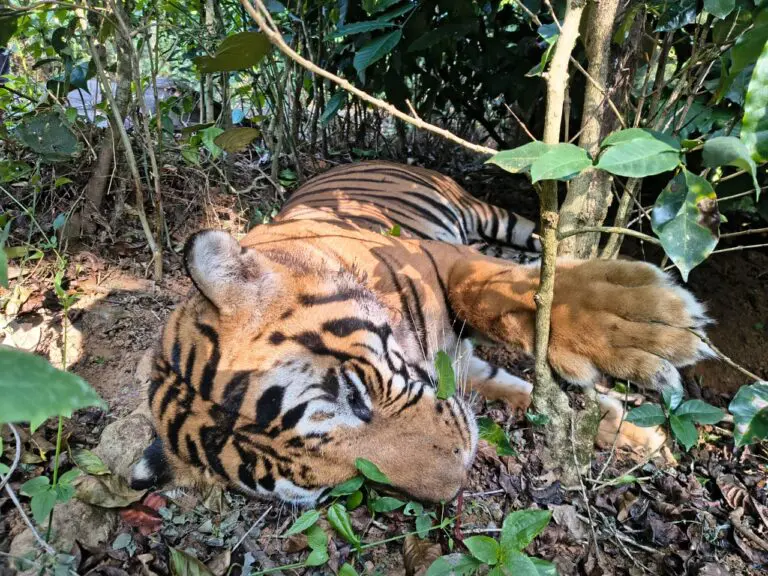
Koto Tabang became the focus of another preventable tragedy after a Sumatran tiger cub was found trapped in a pig snare set by residents, an incident reported by VOI. The cub, caught by its neck, leg, and body, lay helpless in the forest, unable to escape the tightening wire that had turned farmland into a danger zone. These snares are still treated as everyday tools, even though they repeatedly injure the very wildlife Indonesia claims to protect.
A Rescue Built On Suffering
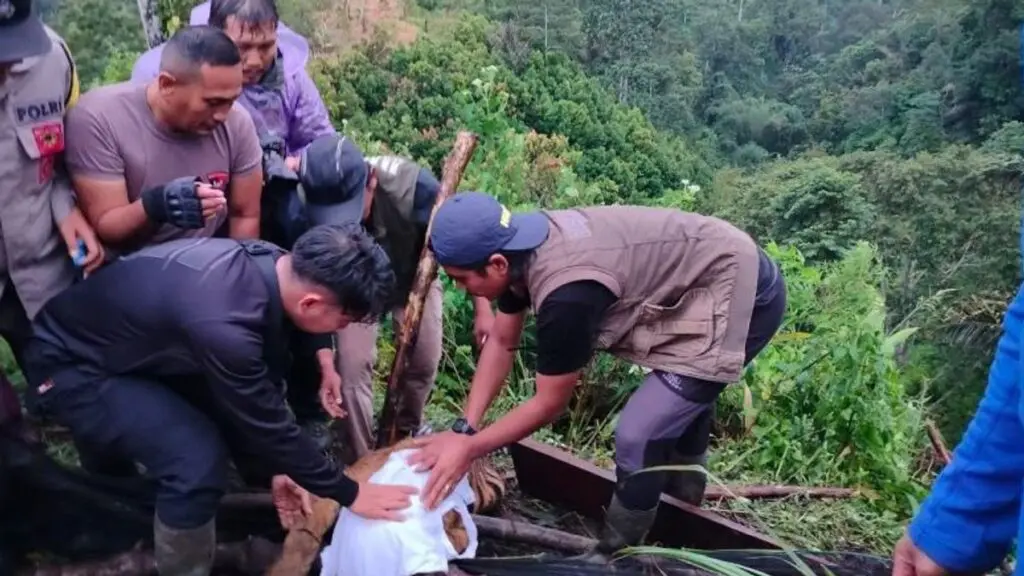
The West Sumatra BKSDA team, assisted by medical personnel from the Kinantan Wildlife and Cultural Park, tranquilised the cub before cutting away the wire. They worked quickly, but speed cannot erase the fact that this young tiger endured a level of pain never meant for any living creature. The cub was transported to Bukittinggi for treatment, its small body marked by the pressure of metal designed to trap something else but capable of killing anything.
Koto Tabang is not unique. Across Sumatra, pig snares are scattered between farms and forest edges. Residents defend their use as protection against crop damage. But snares are not selective. They clamp down on whatever triggers them—boar, bear, deer, or tiger. Each trap becomes a calculated risk forced on wildlife, and each one narrows the already fragile path to survival for a species that cannot afford another loss.
The repeated use of snares in local news now signals a pattern, not an accident. It is a sign of how often communities allow wildlife suffering to become normalised. And it’s a sign that the Indonesian government is not doing enough to prevent it.
Human Convenience Continues To Outweigh Wildlife Survival
Authorities mobilised quickly after a jorong guardian reported the incident, sending police, soldiers, and youth groups to assist. This response shows how much manpower is required once a tiger is already in danger—and how little is invested in preventing such harm. A snare made of simple wire costs almost nothing to set. The rescue operation that becomes necessary afterward costs time, resources, and expertise that should not be wasted cleaning up human negligence.
Koto Tabang reflects the deep entrenchment of snaring culture across rural Indonesia. Warnings are issued every year, but the people don’t care, because they know there is no enforcement. Residents are reminded not to install these traps. Yet without enforcement, permanent alternatives, or meaningful deterrents, people continue using them because the consequences rarely reach them. Meanwhile, tigers pay the price with their lives, their futures, and their ability to recover as a population.
Koto Tabang also exposes the divide between official statements and on-the-ground reality. Authorities urge responsible behaviour while communities continue to treat forests as open hunting grounds. In this environment, every snare becomes another step toward wiping out a species that already survives on the edge.
A Cub’s Injury Reveals A System Built To Fail
Tigers are long-range animals, especially cubs beginning to disperse and explore. They move through forests, plantations, streams, and farms as part of natural behaviour. But in places like Koto Tabang, natural behaviour becomes dangerous. The landscape is filled with devices that tighten, tear, and crush. This is not coexistence; it is a silent war waged against wildlife through outdated, careless methods.
The police chief appealed to residents to stop installing snares, acknowledging the threat they pose to protected species. Appeals, however, rarely shift behaviour. Without real alternatives—fencing, technology, night-time monitoring, early-warning systems, rapid compensation schemes—people will continue to rely on the easiest method available, regardless of the harm it causes.
For a critically endangered species like the Sumatran tiger, each cub matters. Each injury changes the population’s future. Koto Tabang shows not only how vulnerable the animals are but also how deeply flawed the human systems around them remain. Rescue teams should not have to pull bleeding cubs out of wire traps year after year.
Ending the suffering caused by snares requires more than urging communities to behave differently. It requires enforcement, education, and workable replacements—tools that reduce pig damage without turning forests into killing grounds. Without those changes, Koto Tabang will become another name in a long list of tragedies.
Until Indonesia confronts truths like in Koto Tabang directly, tiger cubs will continue to return from the forest in wires instead of walking freely in the habitats meant to sustain them,
Source: Voi, Indonesia
Photo: Voi, Indonesia