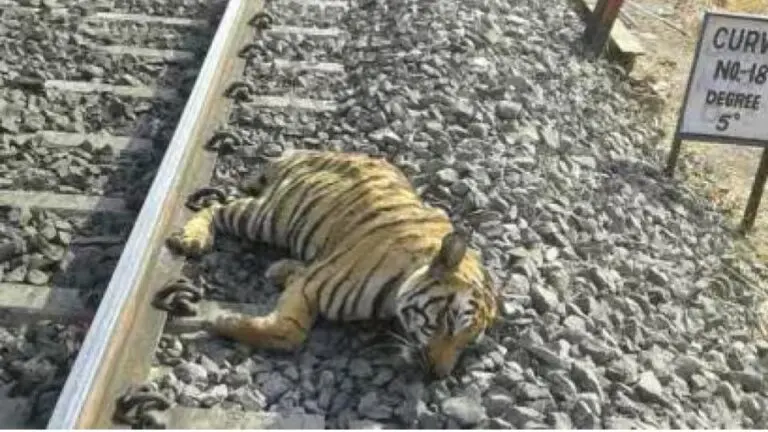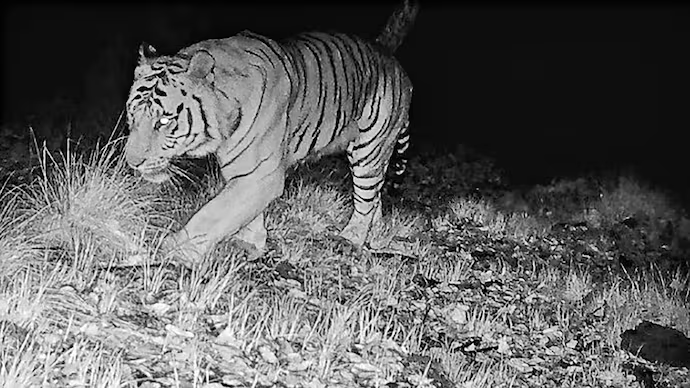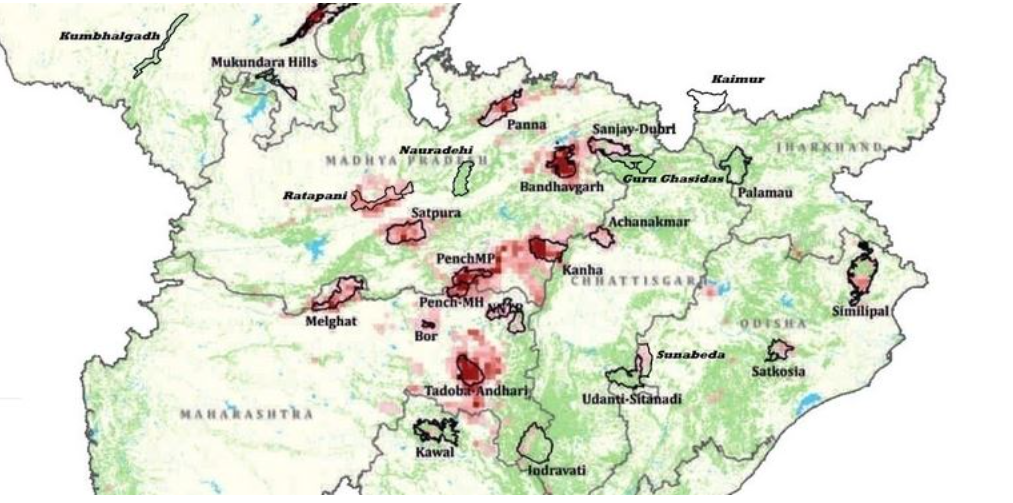
Despite a critical report from the Indian tiger authority (NTCA), India’s Environment Ministry has approved a dam project across the Ganjal River in Madhya Pradesh. The site, part of a crucial tiger corridor linking Satpura and Melghat reserves, will now face submersion. As reported by Tribune India, this is not just administrative indifference—it is betrayal towards nature and conservation disguised as progress.
The NTCA had warned in 2024 that both proposed dams, on the Ganjal and Morand rivers, threatened forested terrain vital for tiger dispersal. These forests are part of India’s central highland meta-population system, one of the few remaining genetic bridges connecting two of the country’s most vulnerable tiger landscapes. Destroying such corridors severs life itself.
The science was clear — and ignored
The NTCA’s findings were unambiguous: the proposed reservoirs would drown habitat critical for tigers, leopards, and wild dogs, undermining connectivity that sustains breeding populations. Both Satpura and Melghat currently have low tiger densities and rely on corridor movement for genetic exchange. Fragment those routes, and both reserves risk long-term collapse.
Yet a year later, a “sub-committee” formed by the Union Environment Ministry claimed the opposite. After a brief visit, it declared the corridor’s “functional integrity” intact despite existing infrastructure. It concluded that submerging more forest would “unlikely impede tiger movement.” On that thin justification, the ministry granted approval for the Ganjal dam.
Such reasoning redefines betrayal. Next to ignorance, it looks like willful blindness. When governments treat ecology as negotiable, extinction becomes policy.
The pattern of compromise
This is not Madhya Pradesh’s first ecological compromise. Across India, tiger landscapes are chipped away through projects rebranded as “sustainable development.” Each comes with the same ritual: a critical report, a review committee, a selective reinterpretation, and eventual approval.
The Ganjal project reflects the same betrayal outlined in Tiger Habitat Destruction. Paper promises of “balance” conceal a hierarchy where tigers always lose. Authorities use the word “mitigation” as if forests can be rebuilt, as if wild corridors can be rerouted like traffic. They cannot.
The NTCA’s own data show that the corridor hosts endangered flora, amphibians, and more than 20 large mammal species. Its loss will reduce not just tiger numbers, but the very resilience of India’s central ecosystem. Still, the ministry’s experts—under pressure to approve—found a way to declare the damage “manageable.”
Bureaucracy over biology
India’s conservation bureaucracy is now functioning like a negotiation table rather than a defense line. NTCA exists to uphold scientific thresholds, but its recommendations are treated as optional advice. The Wildlife Institute of India will be asked to “study impacts” after the dam’s approval—an inversion of every conservation principle.
This methodical sidelining of science exposes the emptiness of official slogans. “Project Tiger” and “Amrit Kaal for wildlife” sound noble in press releases, but when tested against infrastructure politics, they dissolve. Like always. The betrayal here is systemic: institutions built to protect the wild are repurposed to justify its exploitation.
The corridor that carries more than tigers
The Satpura–Melghat belt is not a symbolic line on a map. It’s an arterial lifeline for central India’s tiger population—one that connects genetic health, water security, and forest-dependent communities. Submerging it for irrigation undermines both wildlife and local climate stability. Dams do not just flood land; they flood future possibilities.
Supporters of the project argue that another highway and reservoir nearby have not “critically impeded tiger movement.” But absence of evidence is not evidence of safety. Tigers do not sign affidavits of displacement; they vanish quietly. By the time the impact becomes visible, the damage because of this betrayal will be irreversible.
A culture of erasure
The betrayal here runs deeper than one dam. It reflects a national culture that measures progress by concrete poured, not forest preserved. Scientists warn, activists protest, and bureaucrats promise “conditions” and “studies”—until the forest is gone and the file is closed. The government calls it development. Nature calls it loss. And we call it betrayal.
India’s tiger numbers are paraded globally, yet each new project eats into the fragile mosaic that sustains them. If this continues, corridors will exist only in textbooks, and tigers will become museum trophies of our short-sighted ambition.
What betrayal costs
Approving the Ganjal dam despite NTCA’s objections is not an oversight. This is a conscious choice to privilege concrete over conservation. It says that connectivity can be negotiated, science can be diluted, and the tiger’s survival can wait.
When a nation ignores its own experts to please its construction lobby, it betrays not just wildlife but its future generations. The corridor may flood in silence, but the consequences will echo in every dry forest left behind.
For the tigers of Satpura and Melghat, betrayal is not metaphor—it is policy with a project code.
Source: Tribune India, India.
Photo: Insights on India, India.