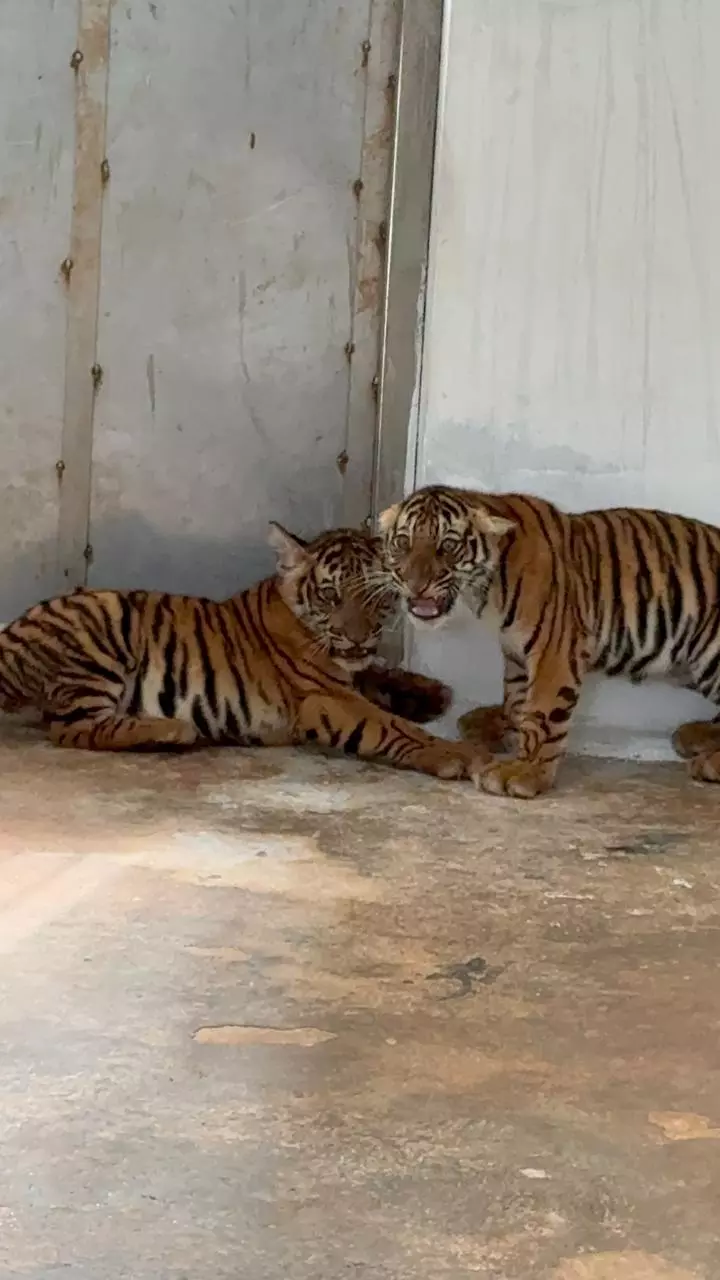
Days after a disturbing video surfaced showing three tiger cubs being handled under car headlights inside Biligiri Rangaswamy Temple (BRT) Tiger Reserve, Karnataka’s Forest Minister Eshwar Khandre has ordered a probe into the incident. The footage, reportedly shot in the Bedaguli forest range of Punajanur, showed men laughing as the cubs stumbled in the glare, their eyes reflecting confusion and fear. What they filmed as amusement was, in truth, an act of violation.
Wildlife activists condemned the clip, saying the men had likely separated the cubs from their mother. The video, uploaded online in late October, quickly spread across social media. It triggered fury not only for the cruelty itself but for what it represents: how easily humans now turn wilderness into content.
Accountability begins with a probe
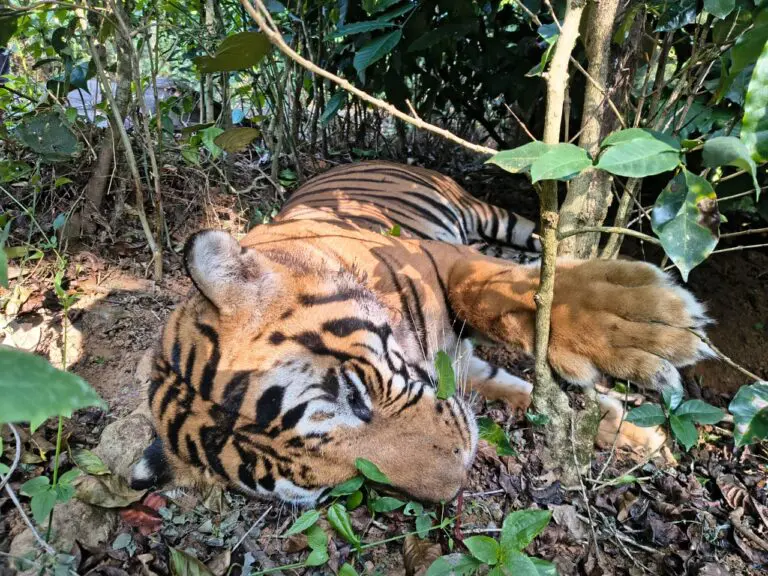
A formal complaint, as reported by The Indian Express, alleged that three men from a private estate in Punajanur had entered the reserve and filmed the cubs, violating wildlife laws. The probe ordered by the minister will be led by the state’s Criminal Investigation Department (CID). Khandre directed his officials to examine whether the tigress had been harmed or poached—a possibility he described as “deeply concerning.”
It’s a rare moment when outrage meets official will. While most such cases vanish into procedural fog, Khandre’s decision suggests at least a flicker of political courage. His statement acknowledged what is too often ignored: laws are only as strong as the willingness to enforce them.
The cultural rot behind cruelty
The three men accused of filming the cubs embody a growing arrogance—humans who mistake the wild for entertainment. Their actions show how the jungle has become another selfie stage. In every forest, cameras now arrive before compassion. These offenders did not document nature; they desecrated it. Their headlights turned innocence into spectacle.
This is why the probe matters. Not because it might punish three individuals, but because it could expose a deeper rot in how society treats wildlife. The mother tigress, still missing, symbolizes more than loss—it represents the trust between nature and human indifference, broken yet again.
From punishment to behavioral change
The discussion on behavioral change reminds us that real conservation begins with restraint, not punishment. Humans must learn to step back, to leave what is wild untouched. The probe must therefore go beyond criminal inquiry; it should become a lesson in ethics. Forests need fewer patrols and more principles.
Every such incident reveals the gap between awareness campaigns and action. India celebrates its tiger numbers while ignoring the culture that endangers them. As long as people believe filming cubs is harmless curiosity, every reserve remains vulnerable to the next “viral” atrocity.
Khandre’s cautious firmness deserves credit. He neither sensationalized nor downplayed the event. He called it by its name: a crime. That clarity itself is rare. But the next step—ensuring the probe leads to convictions—will test whether his department’s conscience matches his words.
Lessons from a viral wound
If the CID identifies the culprits, they should face the strictest penalties available. But beyond punishment, India must confront why forests still attract trespassers posing as nature lovers. Technology has turned empathy into voyeurism. People film suffering to prove proximity to power. The forest, meanwhile, absorbs the insult in silence.
The cubs in that video will grow up learning fear from headlights and human laughter. The rest of us must learn humility from their trauma. Until we do, every new probe will repeat the same story: laws chasing cruelty, never preventing it.
The tiger doesn’t need more investigations; it needs space and respect. Khandre’s order may not restore that, but it reminds us that decency still has defenders. The question is whether the rest of India will join them—or keep turning its back, phone in hand, waiting for the next video.
Source: Indian Express, India.
Photo: Indian Express, India.