Two rescues, one pattern
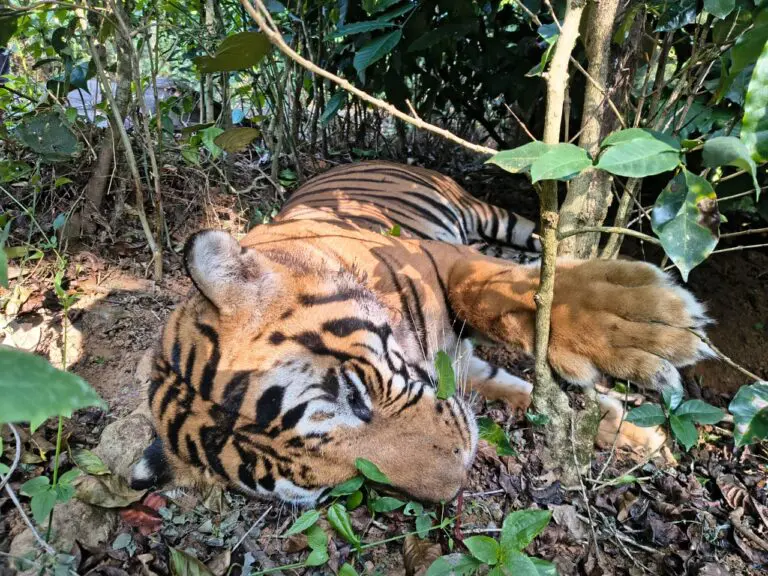
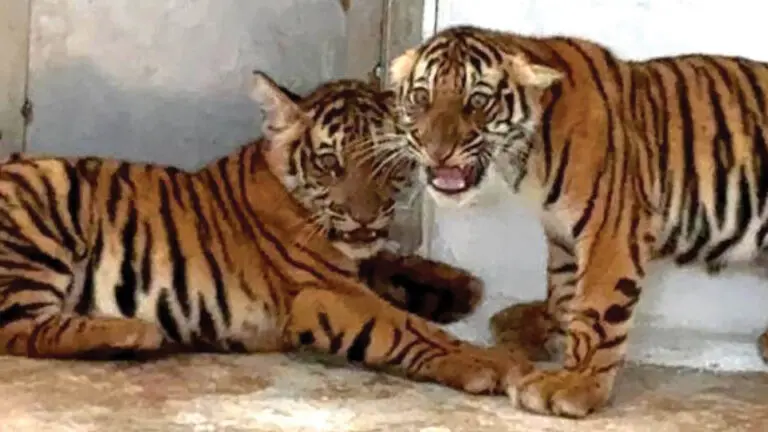
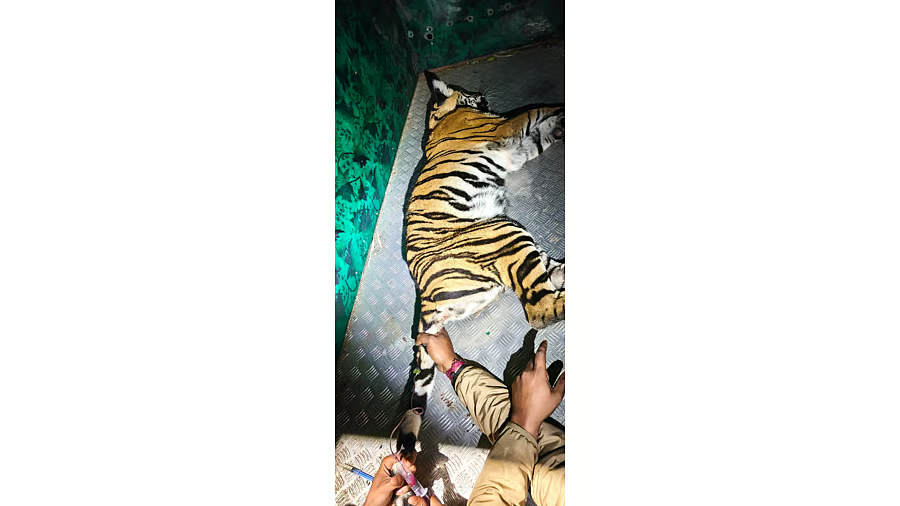
Chamundi became the final destination for two Bandipur tigers rescued in early November 2025, when forest staff in Karnataka captured them and sent both to the rescue centre at Koorgalli in Mysuru. One was an eight- to nine-year-old male identified as the tiger that killed a farmer near Hale Heggudilu on November 8. The other was a one-and-a-half-year-old female cub caught three days earlier at Hosavindu, under the Hediyala range. Officials call these operations rescues, yet each one removes another fragment of the wild. Every tiger entering Chamundi leaves behind territory, genes and independence. It is where wild animals become paperwork.
The male tiger carried a snare wound on its neck, the likely cause of the fatal attack. The female cub was found a kilometre away, disoriented and alone. Both are now confined. The forest department calls this safety—for humans, for tigers, for politics. The result is the same: the wild loses another regulator, and Bandipur another story of coexistence. Chamundi, meant for recovery, has become an archive of defeat.
The reflex of removal
Bandipur’s script never changes. A tiger injures or kills someone, panic spreads, and within hours a capture order follows. Few ask how a wounded animal reached farmland or why alert systems failed. The word Chamundi appears in every conclusion, not as place but as pattern. It was built as a temporary shelter, yet almost no tiger returns to the forest. Each arrival signals another unresolved failure of field protection.
According to Deccan Herald, forest officials confirmed that DNA tests would verify the captured male’s role in the attack. Such analysis satisfies headlines, not ecology. A tiger in pain follows instinct, not malice. The cage that follows satisfies bureaucracy. Once transferred to Chamundi, it becomes evidence of control rather than an opportunity for reform.
Bureaucracy over biology
A recurring truth in human–tiger conflict is that response systems value order more than outcome. Capture is easy to record, release is risky to defend. In Bandipur, the reflex to remove has replaced the patience to understand. Each tranquilised tiger keeps the illusion of management intact. Chamundi absorbs the tension so that statistics look clean. Inside, the animals pace concrete floors until exhaustion teaches silence. They are living trophies for departments that confuse sedation with compassion.
The continuing pattern of conflict between humans and tigers exposes design, not accident. Prevention demands early-warning networks, trained rapid-response teams, and local incentives to protect prey and habitat. Instead, resources flow into cages and transport crates. The result is measurable, photogenic, and entirely misleading.
The invisible frontier
On the edges of Bandipur, farmland presses against the forest. Cattle wander, plastic waste collects, and snares built for deer catch predators instead. When a tiger escapes pain by crossing a boundary, it enters another trap: politics. Each confrontation produces the same conclusion—send it to Chamundi. The cycle converts ecological tension into administrative routine.
Evidence from India’s own field reports shows how human–tiger conflict persists where monitoring, fencing and compensation lag behind promises. Long-term coexistence needs sustained planning, not tranquiliser darts. Yet the practice continues because it offers the fastest way to calm public anger. Chamundi has become shorthand for containment, a word repeated until its cruelty disappears.
The cost of comfort
Every “safe” relocation comforts headlines and voters but subtracts freedom from the landscape. A tiger behind bars is counted alive in records yet dead in purpose. Chamundi represents this contradiction better than any statistic. It stands for the belief that captivity is cure. Forest officials deliver progress reports; the forest itself grows quieter.
Real progress would mean strengthening early-warning systems, funding community vigilance, and confronting the criminal economy of snares. Without that, Bandipur’s future will remain a rotation of capture, applause and silence. Chamundi cannot remain the default answer to every mistake made outside its gates.
A pattern that must end
Two rescues in one week revealed a habit stronger than any lesson from past conflicts. If the same logic continues, the next tiger will follow the same road from Bandipur to Mysuru. The problem is not the centre; it is what sends animals there. Unless the meaning of Chamundi changes—from prison to passage—each new rescue will quietly mark another loss of the wild. The forest will survive, but its freedom will not.