A new policy, an old betrayal in Beladakuppe
In Karnataka’s Bandipur Tiger Reserve, the forest is being repackaged as faith. The state’s Tourism Policy 2024–29 lists thirteen new sites in Mysuru district, including the Mahadeshwara temple at Beladakuppe, a shrine that sits six kilometres inside the forest. Officials call it cultural promotion. Conservationists call it the next frontier of destruction.
According to the Deccan Herald, thousands of devotees visit the temple during Karthika Masa and on every new-moon day. Each visit means vehicles, loudspeakers, bonfires, plastic waste, and the constant hum of engines in tiger country. What the government brands as “religious tourism” amounts to opening a protected core to permanent disturbance.
Devotion turned invasion
The temple’s location in the Hediyala range once served as an informal pilgrimage site maintained by locals. That changed when the government took over the temple in 2022 under the Hindu Religious Institutions and Charitable Endowment Department. Since then, religious processions, fairs, and new access roads have multiplied. The annual jatra now attracts tens of thousands of pilgrims.
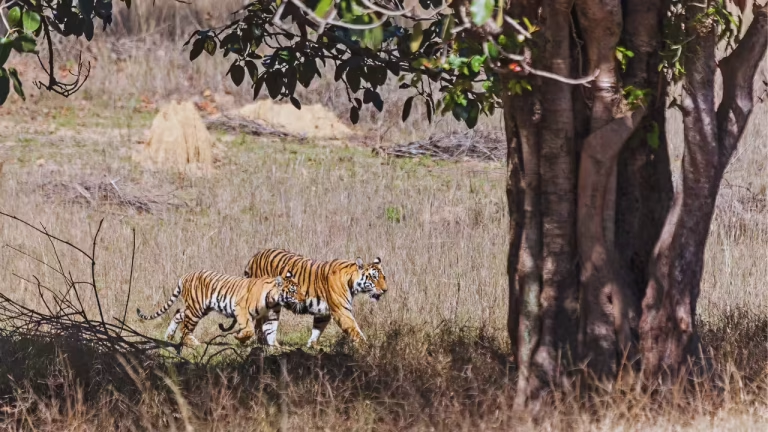
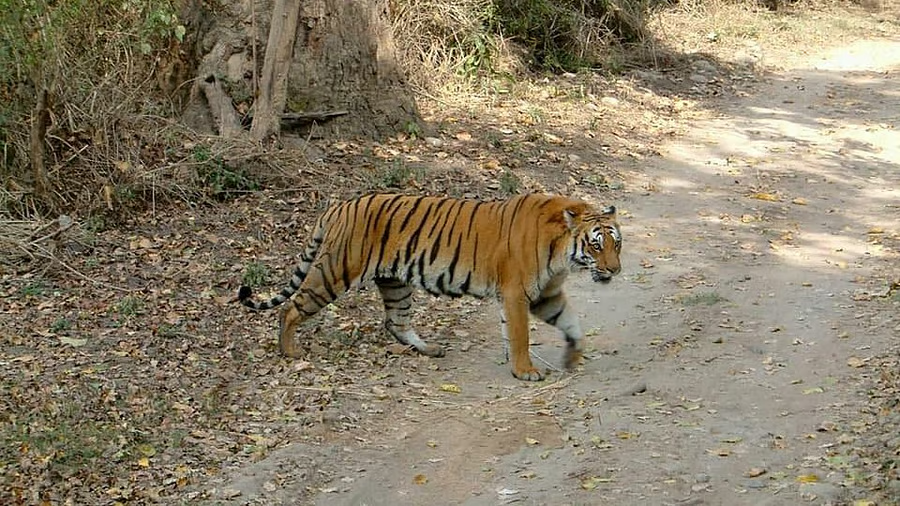
Beladakuppe is no longer just a place name; it has become shorthand for how culture is used as camouflage. Every time a bulldozer flattens a trail for devotees, wildlife loses ground. Tigers, elephants, and leopards that once roamed quietly through Bandipur’s core now face human traffic at all hours.
Forest officers warn that such gatherings violate core-area norms of the National Tiger Conservation Authority (NTCA). Yet district officials continue to issue temporary permissions, citing “public sentiment.” When religion becomes an excuse for bureaucracy to disobey science, the result is predictable—habitat fragmentation in the name of holiness.
The anatomy of conflict
Recent months have seen rising human–tiger encounters near Beladakuppe. A farmer from Badagalapura was blinded during a tiger-rescue operation gone wrong. Another incident involved a tiger entering agricultural fields on the Saragur fringe. Each event fuels public anger and strengthens demands for lethal control, even though the triggers are human intrusion and noise during festivals.
The NTCA has already inspected the site and recommended that the entire Beladakuppe Jatra Mahotsava be shifted outside the core forest. Its report described the festival as a serious ecological threat. The state ignored it. The hypocrisy is stark: the same government that boasts of tiger numbers under Project Tiger undermines its own conservation zones to score political points with devotees.
This is not culture but policy masquerading as piety.
Culture without consequence
The tiger has always stood as both sacred and feared. Ancient stories cast it as a guardian of balance, not a victim of pilgrimage. Turning its forest into a carnival reverses that—it transforms reverence into disregard.
At Beladakuppe, the very rituals meant to honour Mahadeshwara Swamy now threaten the deity’s natural domain. Loud devotional music echoes through valleys that once knew only cicadas. Bonfires burn where prey once grazed. Plastic and food waste lure scavengers, altering behaviour of deer and wild boar, which in turn draws predators closer to people. The spiral continues until the tiger appears at a roadside and headlines scream “man-eater.”
Faith is personal; its logistics are not. When devotion crosses ecological limits, it becomes trespass.
Political sanctity, ecological sin
The Tourism Policy 2024–29 was designed to brand Karnataka as a “spiritual and eco-tourism hub.” Combining those terms is an act of linguistic fraud. Eco-tourism requires restraint, data, and capacity limits; spiritual tourism rewards volume and spectacle. The inclusion of Beladakuppe demonstrates how economic ambition redefines legality.
Environmentalists like Giridhar Kulkarni have warned that continuous human movement inside the forest will cripple the very species that make Bandipur globally significant. Old and injured tigers, unable to compete, already drift toward the buffer. Introducing more vehicles and food waste ensures further conflict. Yet the state frames critics as anti-development, turning ecological concern into political opposition.
The temple’s defenders insist that the forest belongs to all faiths. That argument collapses under the Wildlife Protection Act 1972, which designates the area as critical tiger habitat where any non-forest activity requires central approval. None was sought. Every permission letter for the jatra is therefore an admission of violation.
The silence of science
Forest officers privately admit frustration. Many field staff have submitted written objections, noting that every festival season leaves Bandipur littered with waste. Camera-trap coverage during the Karthika Masa period drops sharply because batteries die from constant human interference. No tiger chooses to cross a path where loudspeakers chant all night.
But protest within the department meets quiet transfer orders. Scientists are told to “cooperate with cultural sensitivity.” The state’s idea of sensitivity, however, applies only to votes, not to species. Beladakuppe has become the model for how to normalise encroachment: start with a shrine, build a road, call it heritage, then invite investors.
When gods need forests more than humans do
The Mahadeshwara temple predates the tiger reserve by centuries, but its sanctity once depended on isolation. Pilgrims walked barefoot through forest trails, leaving offerings but taking nothing. The modern tourism drive replaces pilgrimage with consumption—temples wired to power grids, selfie stations at clearings, souvenir stalls under old fig trees.
If belief means respect, then protecting the forest around Beladakuppe is the highest act of worship. Moving the festival outside the core would not diminish faith; it would dignify it. The NTCA’s recommendation to shift the jatra remains the most sensible compromise, yet it sits buried in files while politicians debate “people’s rights.”
A pattern beyond Mysuru
The story mirrors a nationwide trend. From Assam’s Kamakhya temple to Maharashtra’s Tadoba shrines, states are converting religious sites within sanctuaries into tourism assets. Each case chips away at the line between devotion and destruction. The tiger, once the totem of India’s spiritual imagination, now pays the price of pilgrimage.
Until Beladakuppe is treated as a warning rather than a model, Bandipur’s silence will continue to shrink under the sound of megaphones. True reverence would mean listening—to forests, not festivals.
Source: Deccan Herald, India
Photo: Deccan Herald, India