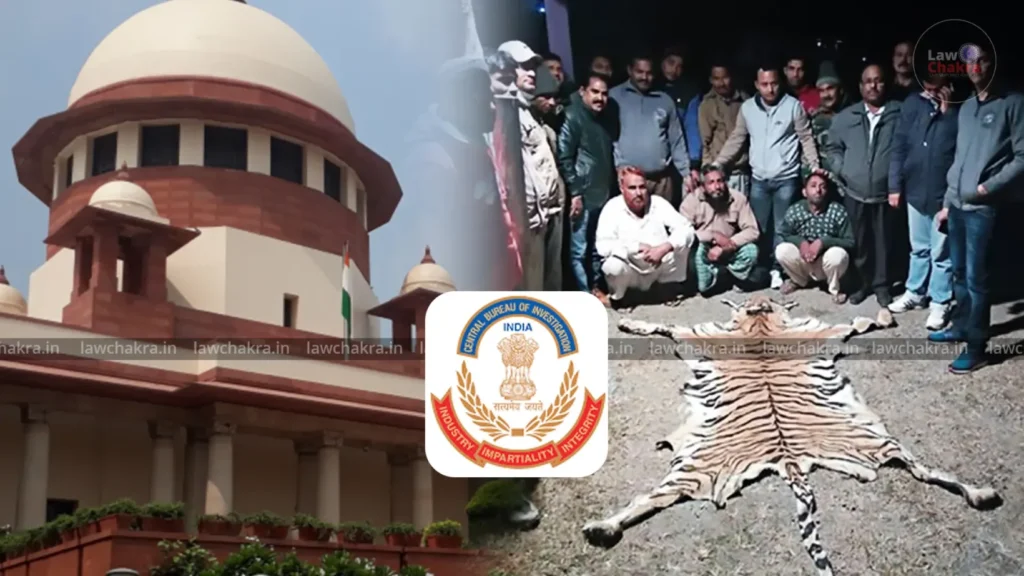
For seven years, a Central Bureau of Investigation (CBI) probe into tiger poaching in Corbett National Park has sat idle under a Supreme Court stay. Now, activist Atul Sati is demanding the truth be uncovered. His new petition, reported by Lawchakra, claims the court was misled by senior officials who hid crucial Wildlife Institute of India (WII) findings that could expose a transnational trafficking network. The case shows how India’s legal machinery can paralyze itself—and how every delay protects the criminals who thrive on that paralysis.
The activist who refused silence
Atul Sati, a veteran Uttarakhand campaigner known for confronting illegal construction and forest corruption, filed his plea on November 1. He asked the Supreme Court to vacate its 2018 stay on the CBI investigation into Corbett tiger poaching. According to Sati, officials convinced the court to block the probe by claiming the Uttarakhand High Court’s order relied only on newspaper reports. But he says that was false. The High Court had based its ruling on detailed evidence, including a WII analysis linking seized tiger skins from Nepal directly to tigers from Corbett.
Those findings pointed to an international supply chain—one reaching from Uttarakhand through Nepal and into the wider black market. When the CBI was stopped, so was the only chance of dismantling that network. For Atul Sati, reopening the investigation isn’t about headlines; it’s about accountability in a country that still loses tigers faster than it prosecutes poachers.
Bureaucracy as camouflage
The state’s former Chief Wildlife Warden, D.S. Khati, argued in 2018 that the High Court’s order for a CBI inquiry was unfair because the forest department had not been heard. Sati’s application dismantles that claim. It points out that Khati himself filed an affidavit in the High Court—meaning his department was fully represented. The activist calls this legal maneuvering “an unethical attempt to block scrutiny.”
This is what corruption looks like in conservation: not poachers in the forest but officials in offices creating procedural fog. Bureaucratic delay often serves as the final layer of protection for global trafficking networks that run through India’s reserves. The Corbett case is its perfect example. Each stay order, each missing file, each jurisdictional quarrel buys time for syndicates that never stop killing. Atul Sati’s petition forces those corridors of silence into the open.
What the data really says
According to the petitions reviewed by the High Court, Uttarakhand Police seized 55 tiger and leopard skins between 2014 and early 2017. WII scientists traced some of these to Corbett’s distinct genetic lineage, confirming what field officers had long suspected: organized poaching rings were operating with local and cross-border links. Yet the forest department’s senior leadership tried to frame the evidence as unreliable.
The contradiction is devastating. On paper, Corbett is one of India’s most monitored reserves. In reality, enforcement is selective. The poachers were caught; the masterminds were not. Files were shuffled, roles reassigned, and suddenly the case turned into paperwork rather than a pursuit. For seven years, tiger trafficking data has been frozen—its urgency replaced by silence. Atul Sati’s persistence is what keeps the case alive.
A Supreme Court misled, and a country waiting
Atul Sati argues that the Supreme Court was misinformed when it accepted the state’s appeal. The WII’s report, he says, was hidden deliberately, erasing the scientific link between the recovered skins and Corbett’s tiger population. Without that evidence, the case looked weak. With it, it points to something explosive: an organized wildlife-crime network spanning India, Nepal, and parts of Uttar Pradesh and Haryana.
Atul Sati’s persistence comes at a cost. Challenging the bureaucracy in a state that worships its institutions can make an activist a target. But without voices like his, tiger protection in India risks becoming a ritual of numbers, not justice. The real test of conservation isn’t how many tigers India counts—it’s how many traffickers it convicts.
The cost of delay
Every year of legal stalling erodes accountability. Forest officers retire, memories fade, and evidence loses weight in court. Meanwhile, the global market for tiger skins, bones, and derivatives continues. Corbett’s silence hides an industry worth millions, fueled by demand from China and Southeast Asia.
The longer the Supreme Court’s stay remains, the deeper the message sinks: even India’s most celebrated tiger reserve cannot defend its dead. Atul Sati’s case isn’t only about one investigation—it’s about whether the law will serve tigers or protect those who betrayed them.
What comes next
The Supreme Court will now decide whether to lift the stay and allow the CBI to continue its probe. If it does, the investigation could revive critical leads and reconnect the trail from Corbett to Nepal. If it doesn’t, the freeze will harden into precedent, discouraging future inquiries into wildlife crime.
Either way, Atul Sati has already done what too few have: refused to accept bureaucratic extinction as the price of tiger conservation. In a system built to forget, he insists on remembering—and that makes him dangerous to those who prefer the quiet.
Source: Lawchakra, India
Photo: Lawchakra, India