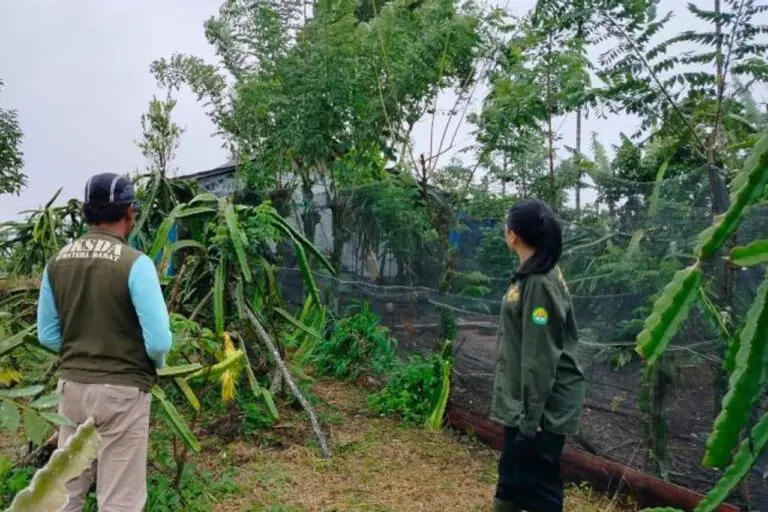
Plantation expansion has finally been named as a problem by Malaysia’s government, but only after the damage has already been done. On 12 December 2025, officials announced that no new land will be opened for plantation purposes, citing rising human–wildlife conflict as forests continue to shrink, as reported by New Straits Times. The statement sounds responsible. It is not. It comes after decades of sanctioned deforestation that pushed wildlife into collapse long before conflict reached headlines.
Malaysia once held more than 400 wild tigers in 2010. In St Petersburg, the country publicly committed to doubling tiger numbers within 12 years. Today, fewer than 150 remain. That is not a conservation setback. It is a systemic failure driven by plantation-driven forest loss and the poaching networks that follow cleared land like shadows.
The announcement did not mention tigers. It did not acknowledge extinction risk. It framed destruction as an inconvenience to humans.
Plantation Expansion And Manufactured Conflict
Plantation growth in Malaysia has never been neutral land use. It has meant large-scale forest clearing, road building, worker camps, and access corridors that fragment habitat and invite illegal hunting. As forests shrink, tigers, tapirs, and other wildlife are forced into smaller, degraded spaces. When animals cross into villages or plantations, the state labels it conflict, as if the animals initiated the encounter.
This framing is dishonest. Tigers are not invading. They are being compressed. When plantation boundaries replace forests, prey species decline, territories collapse, and movement corridors disappear. The result is predictable. Wildlife appears where humans decided forests were expendable.
Officials now argue that opening new plantation land worsens conflict. That is true, but it is also belated. The conflict narrative ignores that the plantation economy was allowed to expand precisely because wildlife was treated as collateral damage. Forests were cleared first. Consequences were acknowledged later.
Productivity Excuses And Political Amnesia
Government representatives now stress the need to increase productivity on existing plantation land rather than opening new areas. This logic is presented as a balanced solution. It is not new. It has been repeated for years while expansion continued anyway. Replanting ageing oil palm trees and improving yields through research were always options. They were simply less profitable than clearing new forest.
Malaysia committed in 1992 to maintaining at least 50 percent forest cover. That figure has been used repeatedly as political cover, even as remaining forests were fragmented into isolated blocks unsuitable for large predators. Tigers do not survive on percentages. They survive on connected, intact landscapes.
While ministers speak of restraint today, tiger numbers tell the real story. From more than 400 animals to fewer than 150 in little more than a decade is not the result of natural decline. It is the outcome of policy choices that privileged plantation growth over ecological survival.
Poaching Follows The Plantation Edge
Where plantations expand, poaching accelerates. Roads built for agricultural access double as entry points for illegal hunters. Workers and contractors create constant human presence deep inside former tiger range. Snares are set. Tigers disappear quietly. Official statements rarely connect these dots, but the pattern is well established.
The same government now presenting itself as protective oversaw the conditions that allowed tiger poaching to thrive. Enforcement did not fail accidentally. It failed because landscape-level destruction made protection impossible. You cannot patrol what you have already erased.
Stopping new plantation permits now does nothing to restore what has been lost. It does nothing for tiger populations already pushed below recovery thresholds. And it certainly does nothing if the motivation is to reduce inconvenience to humans rather than prevent extinction.
Conflict Framing As Moral Evasion
Human–wildlife conflict is invoked as justification for policy change, but it is also used to avoid responsibility. By focusing on conflict, authorities shift attention away from habitat destruction and toward animal behaviour. The implication is subtle but dangerous: wildlife is the problem that needs managing.
Tigers did not choose plantations. They did not design monocultures or approve land concessions. They are responding to a landscape stripped of cover and prey. Treating this as conflict rather than consequence allows the same system to continue under softer language.
Even now, there is no commitment to restore corridors, reclaim degraded land, or halt plantation-linked infrastructure expansion. A pause on new permits without rollback, restoration, or accountability is not conservation. It is damage control.
Too Late Is Not The Same As Enough
Malaysia’s tiger crisis is not a mystery. It is the direct result of decades of plantation-driven deforestation combined with weak protection and tolerated poaching. Announcing restraint only after tiger numbers have collapsed below 150 is not leadership. It is an admission that warnings were ignored until there was almost nothing left to lose.
If plantations truly stop expanding, it will not be because tigers mattered. It will be because conflict became politically inconvenient. That distinction matters, because policies built on convenience rarely hold when pressure returns.
The collapse of Malaysia’s tiger population sits squarely within the wider history of palm oil expansion and habitat destruction, a pattern already documented in how plantation economies systematically erase tiger landscapes and convert extinction into an acceptable trade-off.
Source: New Straits Times, Malaysia
Photo: New Straits Times, Malaysia