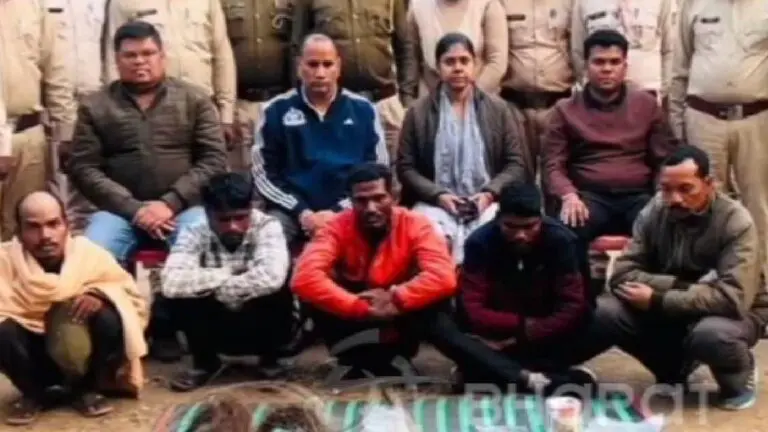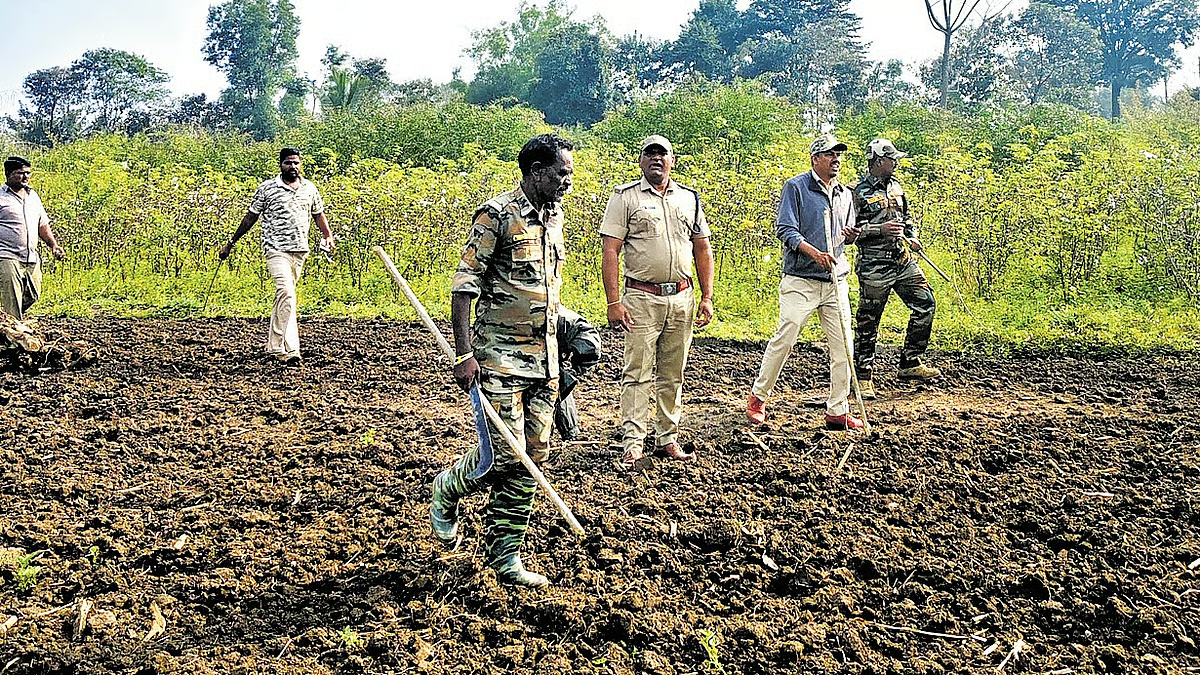
Roaming tigers are again being treated as a problem in Karnataka, after forest officials confirmed that 11 individuals have already been captured in Saragur taluk and, as reported by Star of Mysore, another 21 tigers are still moving through the riverine edges of Bandipur and Nagarahole. What sounds like a security alert is in truth a failure of planning. These tigers are not invading villages; they are trying to survive in the last fragments of habitat left to them, following the same seasonal rhythms they have followed for centuries. The tragedy is not that tigers roam. It is that humans respond by catching them.
Officials framed this situation as an emergency, citing recent human-tiger conflicts, like fatal attacks and injuries. Each human loss is real and deserves full respect, but extracting roaming tigers has become the easiest way to calm tempers. The pattern is predictable: a tiger appears near farmland, a camera trap or eyewitness confirms movement, and removal orders follow. This has nothing to do with coexistence and everything to do with public pressure. The forest department speaks of safety, but for tigers, safety ends where the cage begins.
Breeding Season Misread As Conflict
In August through December, tigresses frequently station themselves near dense vegetation close to streams and agricultural boundaries. This behaviour is not aggression; it is maternal protection. Yet these natural decisions become exaggerated into conflict narratives. Officials themselves admitted that the roaming tigers have not entered deep into settlements. They are following shade, water, and prey refuge. Still, the reaction has been panic-driven combing operations involving multiple teams and trained elephants.
When six cubs are among the captured 11, it signals that the response is structurally flawed. Removing cubs destabilises entire territories, erases future breeding lines, and forces mothers to abandon ecological roles they would otherwise serve. It is impossible to justify calling this conservation. It is crowd management disguised as wildlife protection. Each roaming tiger removed is a fresh wound carved into an already fragile landscape.
The Extraction Reflex Is Failing The Forest
The department has turned roaming tigers into walking threats, rather than acknowledging them as indicators of a landscape under stress. Thermal drones have been deployed to sweep the fringes of Saragur and Nanjangud taluks, a tactic designed less for true safety and more for locating animals swiftly before complaints escalate. Technology becomes a tool for extraction, not understanding. Every so-called rescue ends at Chamundi or another holding facility. Few of these tigers ever return to the wild.
Removing roaming tigers from the forest edges ignores the structural reasons they are there: shrinking cover, prey depletion, snare injuries that push them towards easier terrain, and expanding agriculture that physically replaces corridors. Nothing about this cycle is accidental. Human-tiger conflict does not spike because tigers change. It spikes because humans refuse to plan.
State governments continue to rely on temporary fixes. Drone sweeps, elephant patrols, tranquiliser teams—none of these correct the underlying erosion of habitat. They simply make the symptoms disappear. When 21 roaming tigers are identified, the public is told to stay alert; the animals are treated like fugitives rather than native inhabitants displaced by human choices.
Karnataka Must Stop Treating Roaming Tigers As Disposables
If all 21 roaming tigers are captured, Saragur taluk will not become safer. It will become emptier, ecologically silent, and destined to face the exact same crisis again. Removing roaming tigers does not remove conflict. It removes the species that regulates herbivore pressure, controls ecological balance, and signals that the forest is still alive.
Real coexistence requires more than drones and warnings. It demands early-warning systems based on field intelligence, community compensation delivered without delay, grazing regulations enforced consistently, and immediate dismantling of snare networks. It also demands the political courage to explain to the public that roaming tigers are not invaders—they are victims of the disappearing forest line.
The current narrative, amplified through rushed combing operations, turns natural tiger behaviour into justification for extraction. Until this cycle is broken, roaming tigers will continue to be treated as unwanted guests rather than rightful residents. Karnataka has the chance to change this model by investing in long-term solutions, not adrenaline-driven removals.
As conservation principles remind us, the true measure of success is not how many roaming tigers are removed from the landscape, but how many are allowed to live their lives without being forced into cages. Long-term survival will depend on recognising that conflict management is not an event but a continuous duty—one rooted in responsibility, not reaction. The lessons needed today mirror the insights described within the broader context of coexistence challenges found in the analysis at the human–tiger conflict cornerstone. Only when these lessons become practice will Karnataka stop losing tigers to fear.
Source: Star of Mysore, India.