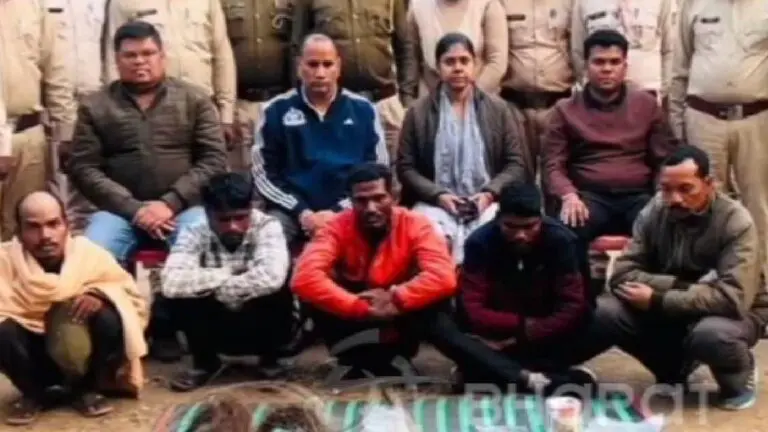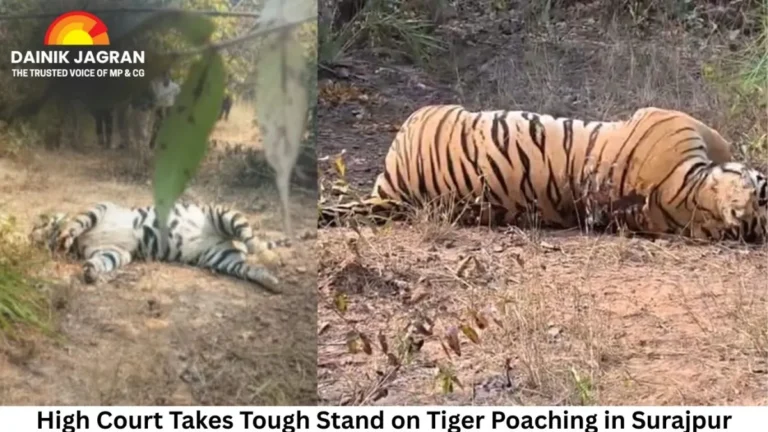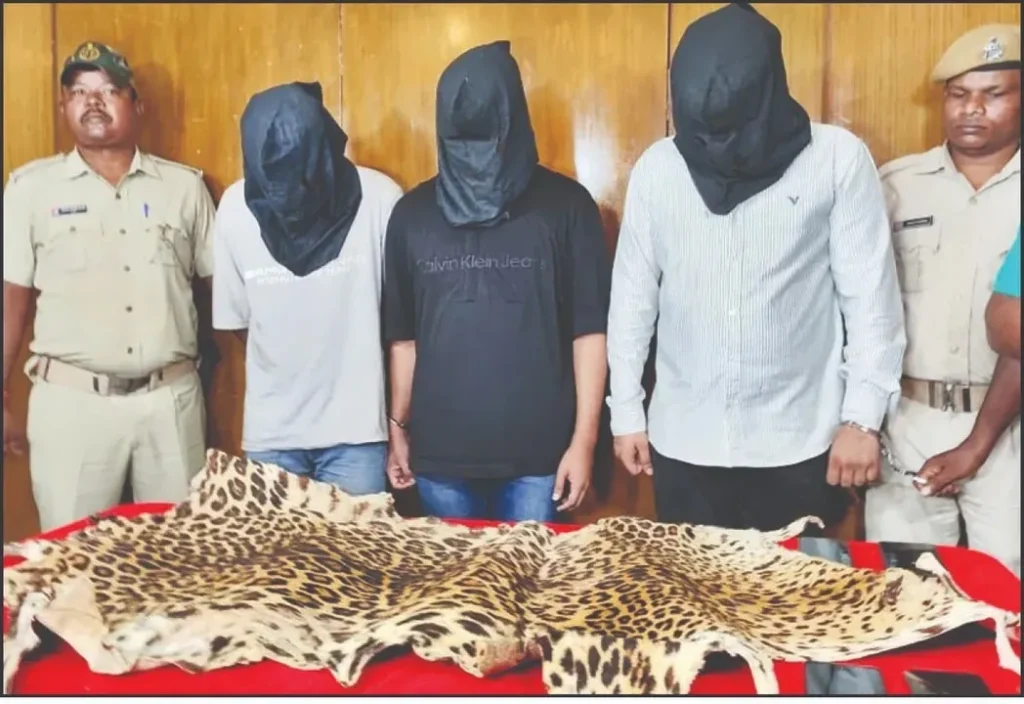
A luxury hotel alley in Bhubaneswar became the stage for a tightly choreographed sting that exposed a live wire of India’s wildlife black market. Acting on specific intelligence, the Special Crime Unit (SCU) of the Odisha Commissionerate Police arrested three men — including alleged mastermind Rohit Mahapatra — during a deal for a big-cat skin. Officers say the suspects had been operating across states for months, moving contraband through rail corridors and safe houses to find high-value buyers in the city.
The seizure did more than foil one sale. In this case it illuminated how a modern trafficking network borrows tools from organized crime — encrypted messaging, layered intermediaries, and cash-to-digital laundering — while feeding the same old demand that has long powered the global machine of tiger poaching.
A meeting in the shadows — and the price of a pelt
According to Sambad English, the takedown happened behind a five-star property after undercover officers posed as buyers and raised the offer to ₹40 lakh (≈ US$48,000) to flush the seller into the open. The accused had reportedly ferried a leopard hide from Karnataka via Rourkela, while also boasting access to tiger nails, teeth, and a tiger skin sourced from other states.
Two alleged agents — Sambhu Bisoi, 23, and Manjeet Sabat, 21 — worked on commission, with payouts that could hit ₹5 lakh (≈ US$6,000) on a single transaction. Mahapatra, who had relocated from Delhi and was living in Khandagiri, supposedly kept the pipeline moving for eight months, using fixers to pre-qualify buyers and “close” deals where scrutiny was weakest. It is no coincidence the final meet unfolded in Bhubaneswar: anonymity, cash liquidity, and transport links converge here.
Bhubaneswar is not an outlier
Treating the bust as a local story misses the point. The same commodity trail that moves narcotics and small arms also moves wildlife parts, and Bhubaneswar sits at a strategic hinge between forested interiors and coastal routes. In recent years, Odisha has shown a pattern: small-town sourcing, state-crossing couriers, and big-city consolidation for handoffs.
The word Bhubaneswar now appears too frequently in seizure notes to be accidental. At one end of the chain are tigers killed in or near reserves; at the other end are urban brokers who understand pricing, risk, and logistics. When one city heats up, the market simply migrates — from Bhubaneswar to Raipur, from Raipur to Siliguri — unless the investigation follows money, not just bodies.
Arrests without financial probing let masterminds walk
The SCU deserves credit for the operation, but a bust is only a beginning. Most wildlife cases stall because they stop at possession and conspiracy, never crossing into financial crime. Every tiger-part seizure should trigger parallel money-laundering probes and asset-freeze actions; otherwise, the network reconstitutes itself within weeks. Bank accounts used to pay agents, wallets that received the ₹5 lakh commission promise, devices that held chat logs — these are not side details; they are the spine of the case.
If Odisha links this Bhubaneswar operation to hawala channels or shell vendors, it can set a national precedent: that wildlife trafficking is prosecuted like organized racketeering, not treated as a minor environmental offense.
The human ladder — who profits, who risks, who pays
On the forest fringe, the first rung is always the poorest. A villager near a reserve risks prison for a few thousand rupees to set a snare. A field handler takes on transport for slightly more. By the time the contraband reaches a city broker, the price has ballooned — a single skin in this Bhubaneswar deal reportedly valued at ₹30 lakh (≈ US$36,000). The margin differential is the business model: push risk downward and profit upward.
Communities living beside tiger territory get criminalized and destabilized; the brokers tap wealthier buyers who want status objects, folk-medicine talismans, or “collectibles.” Any enforcement strategy that does not reduce rural vulnerability and increase urban cost will leave the ladder intact.
Follow the pattern across states — or keep repeating headlines
The Sambad English report details how the hide was procured from Karnataka. Cross-border sourcing is the rule, not the exception. A robust case should therefore map the route: which town received the first package, who handled the Rourkela leg, which phone numbers moved from “availability” to “quote” to “meet.” The same analysis must ask a sharper question: from which forest did the tiger skin allegedly originate?
The Indian tiger authority )NTCA) can, and should, request DNA matching of seized pelts with camera-trap databases to name the exact individual lost from the wild. When a Bhubaneswar case is traced to a specific reserve, accountability ceases to be abstract. A reserve with “zero poaching” claims cannot also be the silent source of a city seizure.
Why the law loses pace — and how to make it sprint
Wildlife cases die slowly: delayed forensic shipments to Dehradun, chain-of-custody gaps, absent witnesses, and adjournments that bleed urgency. Bhubaneswar can break that script if prosecutors run this file like a priority narcotics case — fast-track the lab work, front-load digital evidence extraction, seek custodial interrogation with specific financial questions, and move swiftly for charges that carry real time.
Courts take wildlife crime seriously when investigators present it as a networked threat with money trails, not as a single bag-and-body recovery. Pair WCCB with the state’s Economic Offences Wing and cyber cell now, not after filings go stale.
Demand isn’t “culture”; it’s market engineering
Trafficking thrives when buyers believe fictions: that tiger bone is medicine, that claws confer luck, that a skin is an heirloom. Brokers in cities like Bhubaneswar curate this credulity, mixing whispered tradition with modern salesmanship. Debunking myths is necessary, but demand suppression also needs pain points: seizure publicity that names and shames buyers; stings that target the purchase side; financial blacklisting of anyone implicated.
If the only people who face jail are rural couriers, the system is not protecting tigers; it is protecting the rich.
Corridors, corruption, and the cost of looking away
No trafficking network moves without two lubricants: broken habitat and pliable officials. Each skin implies a kill, and each kill implies a place where patrols, intelligence, or integrity failed. Bhubaneswar’s case should therefore trigger a parallel audit in potential source forests: snare-sweep frequency, informer payments, border chokepoints, and whether patrols genuinely escalate intel or bury it.
Corruption in permitting, procurement, and patrol reporting is not a separate problem from trafficking; it is the substrate on which the trade flourishes. If the network that fed this city deal encountered no roadblocks inside a reserve, the scandal is bigger than three men in handcuffs.
What “success” must mean after this bust
Success is not press conferences or photos with a seized hide. Success is dismantling the chain: indicting the buyer, freezing the broker’s money, documenting the digital trail, naming the forest that lost a tiger, and repairing the protection gap that made the kill possible. Success is when Bhubaneswar stops appearing in seizure narratives because the market is starved — by fear of prosecution, by lack of supply, by the collapse of belief in tiger-part myths, by international coordination that raises risk at every border.
Until then, each “crackdown” is a pause button, not a stop.
Bhubaneswar will celebrate this raid, and it should — the SCU showed resolve and craft. But celebration without structural change becomes complicity by another name. If this case becomes the moment Odisha fuses wildlife law with financial crime enforcement, forces DNA tracing back to specific reserves, and publishes a transparent prosecution timeline, it will do more than remove a skin from the market. It will remove the illusion that tigers can be both symbols and commodities, that a city can sell the wild on Sunday and honor it on Monday.
The men in custody may face prison. The system that created them must face a mirror — and consequences.
NB. On the photo you’ll see the arrested with a leopard skin, which was confiscated as well, next to the tiger skin.
Source: Sambad English, India
Photo: Sambad English, India