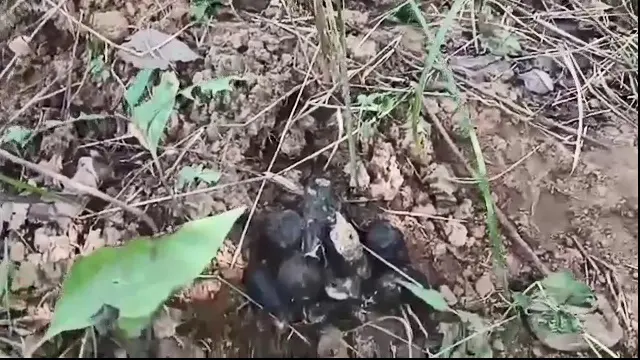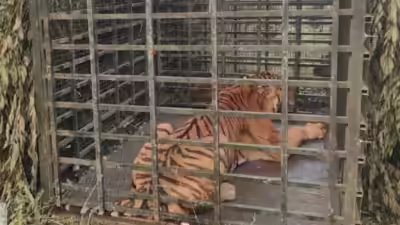
Two separated cubs in Karnataka have become the latest victims of the state’s hypocrisy — orphaned not by nature, but by noise, panic, and politics. Found near Bennegere village after their mother allegedly killed a farmer, the seven-week-old cubs were taken to the Bannerughatta Rescue and Rehabilitation Centre in Bengaluru. Hours later, a drone captured footage of the mother wandering nearby, searching for her young, separated cubs. The department called it a “rescue.” But what it really represents is how fear replaces foresight — and how political theatre replaces protection, as reported by Times of India.
The illusion of compassion
Within hours of the attack, state ministers and MPs arrived in the villages. Cameras rolled as they consoled grieving families, laid wreaths, and promised a “comprehensive plan” to reduce human–tiger conflict. Their sympathy looked sincere. It wasn’t. The same politicians approving road expansions, mining leases, and tourism zones through core tiger corridors suddenly speak of “saving lives” when a farmer dies. Their empathy lasts only as long as the camera battery.
This selective grief has become Karnataka’s most enduring ritual. Each time tragedy strikes, the performance repeats: officials patrol, drones buzz, condolence visits trend, and the forest grows quieter. But in a state where more than 12,000 people die every year from preventable causes — accidents, floods, malnutrition — the government reserves its deepest sorrow only for those killed by a tiger. Why? Because this loss is photogenic. It has a villain, a headline, and a stage.
Separated cubs and political doublespeak
The separated cubs from Bennegere were taken before their mother could return — a decision framed as compassion but rooted in panic. Forest officers followed the rulebook: tranquilize, remove, relocate. Yet every such case hides a systemic failure. These cubs will now live behind fences, deprived of the wild skills their mother would have taught them. They will grow dependent on human feeding schedules, eventually becoming exhibits in the state’s cycle of managed pity.
Meanwhile, politicians praise these interventions as success stories. The word “rescue” becomes a convenient cover for captivity. In truth, these separated cubs are orphans of bureaucracy — the offspring of political doublespeak. They survive only because their deaths would be bad publicity. But their confinement still serves the same purpose: to make people believe something noble was done.
From condolence to contradiction
District leaders who attended the funerals of the farmers spoke about coexistence and compassion. Days later, their own departments pushed infrastructure files that tear through protected corridors in Bandipur and Nagarhole. The state continues to approve “eco-lodges” on forest edges, power projects near reserves, and mining leases in buffer zones. Each approval erases one more strip of tiger land, increasing the chance of another attack — and another round of televised mourning.
These contradictions expose a governance model where tragedy becomes opportunity. Every human death linked to a tiger offers a moment for politicians to appear humane, to promise, to perform. But behind the gestures lies silence — no funding for early-warning systems, no insurance for marginal farmers, no emergency compensation that arrives when it’s needed. The state’s empathy costs nothing, and achieves the same.
Captivity as convenience
At Bannerughatta, the separated cubs will grow up without knowing the wild. Their care will be framed as mercy, their confinement as necessity. Officials will cite safety; politicians will cite compassion. But both rely on the same illusion — that captivity equals protection. It doesn’t. It’s simply containment dressed as virtue.
The mother tigress, still somewhere in the forest, has already been marked as dangerous. Her image will fill briefings, her fate decided in committees that never step into the field. She will either vanish or be relocated — another file closed, another narrative complete. Karnataka will once again declare success: humans saved, tigers “managed,” harmony restored.
What true compassion would look like
Real compassion isn’t televised. It’s found in early-warning networks, predator-proof livestock sheds, fair compensation, and uninterrupted corridors. It means protecting both lives before conflict happens — not pretending to care after. It means admitting that separated cubs are not victories, but confessions of failure.
Karnataka’s politicians love to appear in forests with folded hands and camera crews, speaking of harmony while authorizing destruction. Until that changes, the state will keep producing two kinds of orphans: the human families left behind — and the separated cubs that grow up knowing captivity instead of freedom.
Because empathy without accountability is not compassion at all — it’s theatre played on the edge of a dying forest.
Source: Times of India, India
Photo: Times of India, India