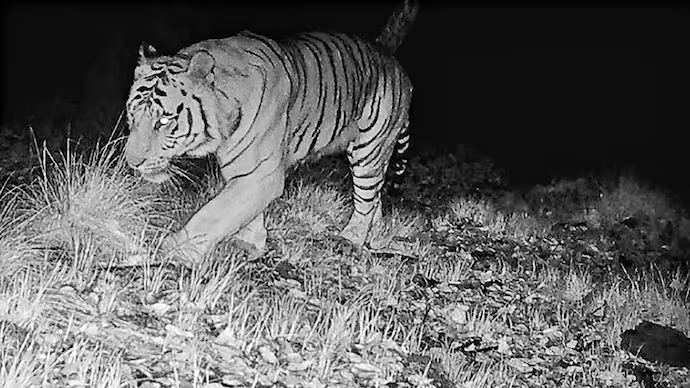
In the Matkuli Zone of Satpura Tiger Reserve, a quiet forest morning turned into something extraordinary. Tourists on safari watched tigress Jhalai stroll along the path, three small cubs padding behind her through the dew-soaked grass. It was the first confirmed sighting of her litter—a moment that lifted an entire reserve’s spirit.
The next generation
According to the Indian Masterminds, Jhalai is the daughter of Satpura’s legendary tigress Laila (T-33). This is her first litter—three cubs, only a few months old, thriving unseen through the monsoon closure. The forest team released a single photograph: a mother in stride, three shadows following. Small, but symbolic of continuity. Satpura now counts more than 70 tigers, up from about 50 four years ago—a rise that conservationists attribute to better protection, controlled tourism, and expanded prey zones.
Conservation that works
Jhalai’s cubs are not just new life; they’re living proof that field protection and steady monitoring pay off. As indicated in Conservation Practices, real success is measured not in policies but in births within safe, connected habitats. Satpura’s management—its strict patrols, seasonal closures, and trained staff—has created one of central India’s most stable breeding landscapes. Yet this stability remains fragile. Too many reserves celebrate births without reinforcing the boundaries that made them possible.
The quiet triumph
For every tourist who glimpses Jhalai, dozens of guards have walked the same paths at night, deterring poachers, clearing traps, and watching over waterholes. Their unseen work allows mornings like this to exist. The image of Jhalai and her cubs isn’t just beauty—it’s accountability, a promise that the forest still belongs to its own.
Satpura’s cubs show that conservation succeeds when it stays invisible until the day it doesn’t have to be.
Source: Indian Masterminds, India
Photo: Indian Masterminds, India