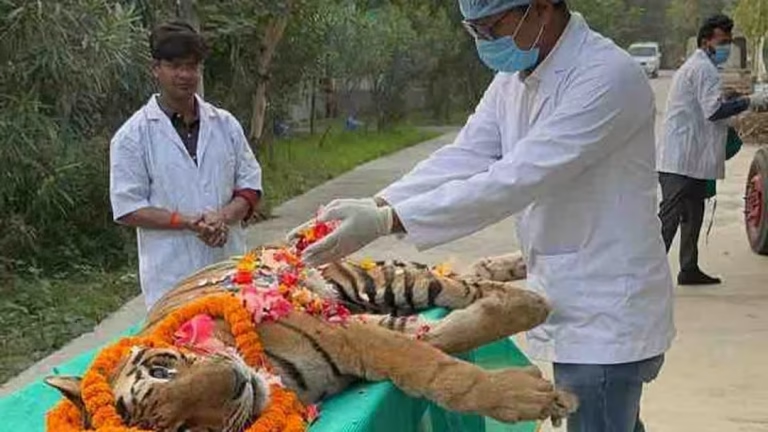
In northern India, where the forests of Corbett and Amangarh breathe on either side of a porous border, forest rangers marched together this week with a single purpose: to prevent another Diwali from turning into a season of death. For centuries, superstition has walked hand in hand with the festival’s lights—fuelled by myths, greed, and a lingering ignorance that now threatens some of India’s most vulnerable wildlife.
The flag march, conducted jointly by the forest departments of Uttar Pradesh and Uttarakhand, may appear ceremonial. Yet, beneath the banners and uniforms lies a desperate annual effort to stop the ritual killing of owls, tortoises, and even tigers. Diwali, a festival meant to celebrate renewal and prosperity, has become a dangerous time for many species. The forests grow tense, patrolling intensifies, and conservation officers know that somewhere, someone still believes that killing an animal will summon wealth.
A fragile peace before Diwali
According to officials quoted in The Times of India, the march began at the forest rest house in Kalagarh and crossed through the buffer zones of both Amangarh Tiger Reserve (ATR) and the Jhirna and Dhela Ranges of Corbett Tiger Reserve (CTR). Forest staff, police officers, and members of local communities joined hands to warn against superstition-driven poaching—rituals that often peak as the Diwali night approaches.
Anshuman Mittal, Sub-Divisional Officer from Bijnor, said the operation involved over forty personnel from multiple forest divisions, who moved through sensitive border villages and held meetings with local panchayats. Their message was clear: Diwali is not a license for blood sacrifice. Patrols were strengthened, border checkpoints activated, and officers urged the Van Gujjar community—pastoralists who have long coexisted with wildlife—to help identify suspicious activity.
Each year, the same pattern emerges: as the lamps are lit in the villages, the forests grow quieter. Traders and tantrics seek body parts—owl feathers, tiger claws, tortoise shells—believing they bring fortune or protection. In reality, they bring only prosecution and loss.
The myth and the marketplace
Across much of rural India, Diwali is not only about devotion. It has also become a lucrative time for illegal traders who exploit myths that link certain animals to Lakshmi, the goddess of wealth. Owls, especially the barn owl, are believed by some to act as her vehicle. This association, twisted by superstition, has turned the species into a target. Conservationists have long warned that the weeks leading up to Diwali witness a spike in owl poaching and trafficking.
Tortoises, too, are not spared. They are captured and sold as symbols of longevity and prosperity. And in darker corners of the trade, whispers persist of tiger parts—bones, whiskers, and even teeth—being used for tantric rituals. These beliefs are neither ancient nor sacred; they are cultural distortions sustained by greed.
The joint operation in Amangarh and Corbett attempted to pierce through these misconceptions. Officers distributed pamphlets and addressed village gatherings, emphasizing that killing any animal under the Wildlife Protection Act, 1972, carries imprisonment and heavy fines. But legal deterrence alone rarely suffices. The challenge, as the tigers in culture cornerstone explores, lies in how myth and memory entwine—how a tiger can shift from being a deity’s guardian to a token of luck in black-market rituals.
The tiger behind the myth
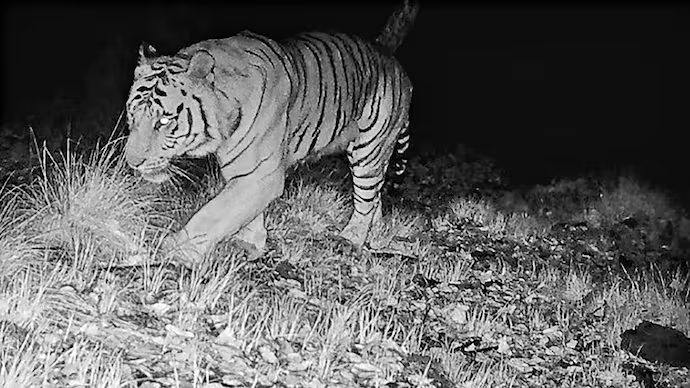
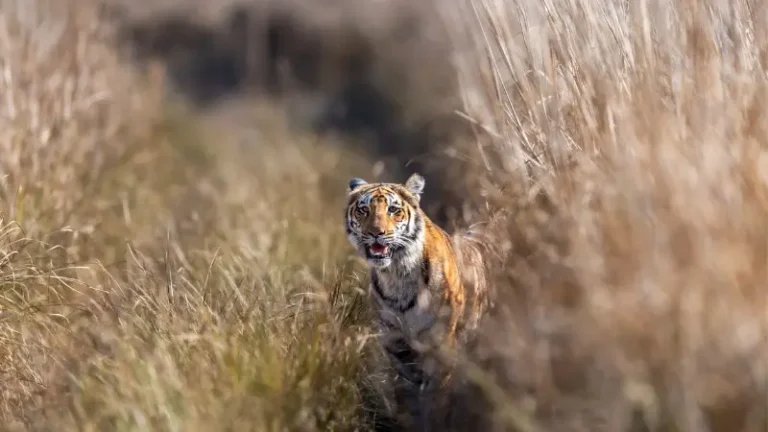
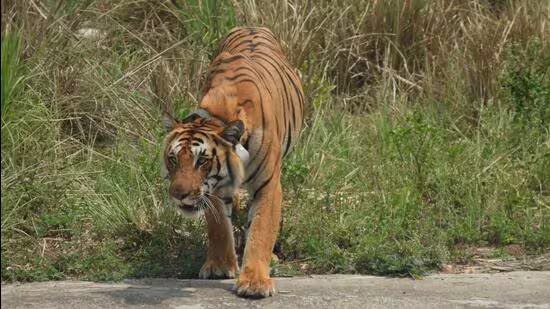
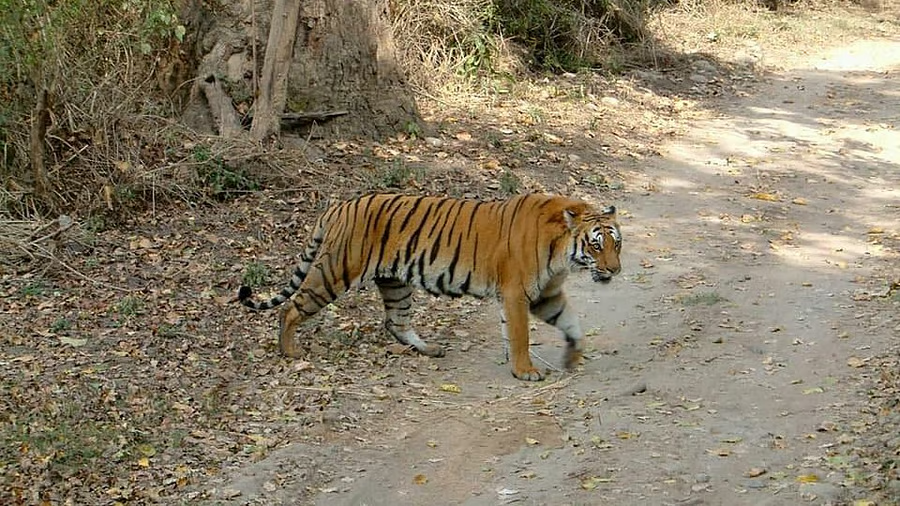
In parts of Uttarakhand and western Uttar Pradesh, Diwali is still shadowed by the stories of “shakti” rituals—rites meant to harness the power of the tiger. Old hunters whisper that invoking a tiger’s spirit brings courage and dominance. The forest department’s fear is that such superstition could lead to opportunistic killings, especially when tigers move closer to human settlements in winter.
This year’s patrols along the southern edge of Corbett and Amangarh aim to prevent exactly that. Rangers say they are maintaining round-the-clock surveillance, using drones and vehicle patrols to monitor known tiger trails. Posters warn against possession or trade of wildlife parts, and special awareness drives are being held in schools around Bijnor and Najibabad.
Despite these efforts, the persistence of superstition underscores a failure not just of enforcement but of education. People have been told for decades that wildlife deserves protection, yet they have not been taught why. For them, a tiger is a symbol—feared, revered, and ultimately misunderstood.
Diwali as a test of belief
Every year, as the lights of Diwali glitter across India, the forest remains the darkest place of all. For officers, it is a period of sleepless nights; for traffickers, it is an opportunity. The festival’s very message—victory of good over evil—has been twisted into its opposite.
In Bijnor, officers describe Diwali patrols as their “most stressful time.” The operations begin days before the festival and last long after. The demand for owls peaks in the week leading up to the event, while reports of illegal rituals arrive from remote hamlets near the reserve boundaries.
The forest department admits it cannot monitor every village. It relies on community cooperation—on people choosing faith in coexistence over superstition. In villages such as Kalluwala, Meerapur, and Dhara, forest staff conducted meetings with elders, explaining that superstition leads to prison, not prosperity.
Some of the older residents reportedly confessed that they once participated in such rituals but have since abandoned them. “We didn’t know it was wrong,” one villager told a ranger. “Now our children are telling us not to harm animals during Diwali.”
The cost of inaction
What happens when superstition outlives reason? In the past, India’s wildlife protection efforts have lost countless animals to rituals that make no sense in a scientific age. The truth is that these acts are not driven by faith but by opportunism. The same networks that traffic tiger skins to Southeast Asia or pangolin scales to China will just as easily sell an owl to a tantric in Delhi.
Diwali, in that sense, becomes a mirror. It reflects what India still refuses to confront—that the greatest threat to its sacred symbols comes not from poverty or hunger, but from ignorance disguised as tradition. Every owl feather sold in secret, every tiger claw worn as a charm, chips away at the nation’s claim to cultural and ecological wisdom.
Until superstition is replaced with awareness, and ritual replaced with reverence, the forests will continue to pay the price for a festival that once promised light.
The forest department’s flag march may not stop every crime this Diwali, but it stands for something more enduring: the courage to challenge belief when belief becomes cruelty. In doing so, it asks the same question of every Indian—what do we truly celebrate when the lamps are lit?
Source: The Times of India, India
Photo: The Times of India, India