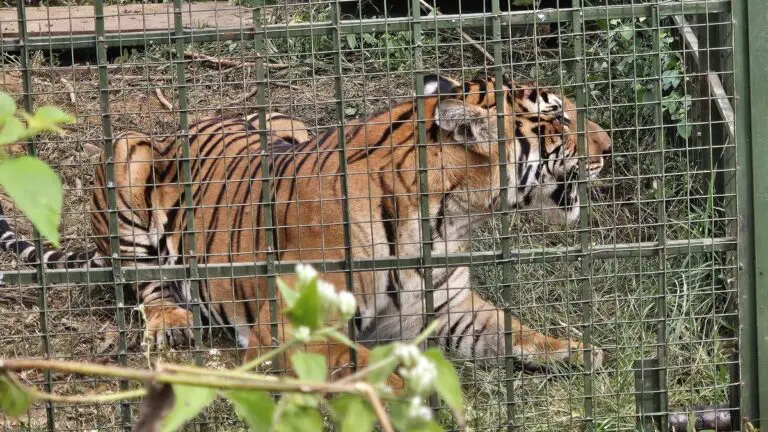
In Karnataka’s Bandipur National Park, four abandoned cubs are being hand-fed by forest officials—an act of mercy that reveals a deeper confusion inside India’s conservation machinery. The department says it has no choice: the mother has disappeared, and the year-old abandoned cubs cannot yet hunt. For now, they are being fed road kills while drones and camera traps watch from above. To outsiders, it sounds humane. But for ecologists and veteran conservationists, this decision cuts across the foundation of what it means for wildlife to remain wild.
The official statement from Bandipur’s warden office describes the feeding as “minimal intervention,” supervised by a technical committee that includes National Tiger Conservation Authority (NTCA) representatives. Yet NTCA guidelines discourage direct feeding. The principle is clear: human help must never replace natural selection. In the wild, some abandoned cubs survive, some do not—that’s how strength evolves. Every exception sets a precedent that weakens the boundary between forest and human conscience.
Abandoned Cubs – compassion and contradiction
Let’s be clear: Bandipur is not a zoo. Its mandate is to preserve wilderness, not to manage it as a rescue shelter. As wildlife expert Praveen Bhargav noted, “The goal of conservation is to manage natural habitats with the least human interference.” That sentence captures the conflict between intent and ideology. Forest officers are acting from empathy, but their decisions reveal how governance blurs under pressure.
The abandoned cubs, around one year old, were found fifty days ago without their mother. The department’s failure to locate her raises a critical question: why was there no formal investigation into the disappearance? A tigress rarely abandons her cubs unless she’s dead, injured, or displaced. If she died, how? If she was killed, by what—snare, retaliation, poisoning, internal poaching? If she left the core zone, why wasn’t it detected? The silence suggests not compassion, but avoidance.
Karnataka’s forest bureaucracy often manages optics before causes. After six tiger deaths in MM Hills earlier this year, the administration needed good news. Saving abandoned cubs offers redemption and headlines—a story of hope instead of accountability. It’s easier to show images of rangers feeding abandoned cubs than to investigate whether the mother’s death reflects systemic negligence.
When empathy replaces evidence
The feeding of these abandoned cubs marks a shift for southern India’s reserves. In Central India, such interventions occasionally occur when drought or conflict forces abandonment. But in the south, Bandipur has long prided itself on “non-interference.” That unwritten rule preserved the park’s natural hierarchy, even during crises. Now, that precedent is gone. Once the department assumes parental roles, the wild begins to domesticate.
Officials say the abandoned cubs are being offered only road kills—naturally dead animals found near highways—to prevent dependency. Field Director S. R. Prabhakaran insists that human contact is limited and the cubs are already hunting small mammals. It’s a fine line: every day of feeding strengthens survival, but weakens instinct.
The cubs’ territory lies within a safari zone now sealed off from tourists. Rangers monitor them through camera traps and drones. Their every movement is recorded, studied, archived. It’s surveillance as stewardship, and yet it turns a forest patch into a controlled enclosure—an “in-situ cage” for animals born free.
If the cubs eventually adapt and hunt independently, Bandipur will claim success. If they die, the department will call it an experiment. Either way, the forest becomes a laboratory where compassion doubles as control.
The question of carrying capacity
Activists argue that Bandipur is already at saturation. Its prey density and tiger population have reached equilibrium; adding four new adults could push younger dispersing tigers into villages, farms, or fringe forests. When survival becomes competitive, weaker tigers stray beyond the core, triggering conflict. Feeding cubs now may translate into future casualties—livestock, humans, and tigers alike.
Wildlife activist Joseph Hoover warns that these abandoned cubs, if kept alive without maternal training, may not distinguish prey from threat. They’ll chase what’s easiest, not what’s appropriate. Such behavioral distortion has consequences beyond Bandipur. A single tiger conditioned to scavenge can ignite panic across districts.
This is not pessimism—it’s pattern. Across India, “rescued” tigers often end up in perpetual captivity or dubious rescue centers once they lose fear of humans. The line between rehabilitation and confinement is thin. What begins as compassion frequently ends as imprisonment.
The missing mother and the missing accountability
The mystery of the missing tigress lingers like an unspoken crime. Official reports avoid naming her or confirming death. Yet tigers don’t disappear without reason. In Bandipur’s history, most vanishings trace to conflict zones, snaring, or poisoning along the park’s edge. Without transparency, the department’s “rescue” narrative functions as camouflage for loss.
This silence is systemic. Governments highlight “saved” abandoned cubs to deflect from policy gaps—fragmented corridors, livestock intrusion, weak enforcement. Compassion becomes a smokescreen for inaction. Each story of nurturing is a story of something broken upstream: patrol failures, delayed response, underreported poaching.
In the framework of conservation practices, such interventions fit the category of “what fails.” They respond to symptoms, not causes. Feeding abandoned cubs addresses visible distress, not structural decay. It’s emotional triage, not ecosystem management.
South India’s new moral experiment
Until now, southern reserves like Bandipur, Nagarhole, and Wayanad have stood apart for letting nature dictate fate. The idea wasn’t cruelty—it was trust. To interfere only when the species itself, not the individual, was at risk. Bandipur’s new experiment reflects the growing influence of optics-driven governance, where wildlife decisions cater to media cycles and ministry agendas.
To the public, feeding cubs looks heroic; to ecologists, it’s symptomatic of misplaced priorities. The real triumph would have been tracing the missing mother, tightening anti-snare patrols, and restoring corridors between Bandipur, Mudumalai, and Wayanad. That’s where tiger survival truly begins.
The use of drones and 24-hour monitoring might sound advanced, but technology without ecological discipline becomes theatre. If the same vigilance were applied to illegal grazing or fire control, the park would need fewer rescues. Instead, innovation is deployed to maintain a spectacle of success.
Between mercy and manipulation
No one questions the sincerity of rangers feeding these abandoned cubs. They are doing what humans instinctively do—save life when they can. But conservation cannot run on instinct alone. It requires restraint, patience, and the humility to let nature recover from its own wounds. When departments blur that principle, they edge closer to the logic of captivity: protect everything, control everything, explain nothing.
The NTCA guidelines exist precisely to prevent such drift. They remind managers that interference must end where wild behavior begins. A tiger cub that grows up thinking food comes from people is no longer a tiger the ecosystem can sustain. It becomes a liability disguised as success.
The thin border between forest and rescue
Bandipur’s four cubs are now symbols of both hope and contradiction. If they survive independently, it will vindicate the instinct that drove the department to act. But if they falter, the episode will remain as evidence of how well-meaning compassion can dilute hard science. Either way, the precedent stands. The next time a cub is found alone, officials will feel compelled to repeat this ritual of rescue—regardless of ecological cost.
For now, the cubs are thriving, their bellies full and paws muddy. Around them, a network of watchers and drones hums with constant vigilance. In the silence of the forest, they are being taught to live—and unlearn freedom.
The missing tigress remains unmentioned, her absence swallowed by bureaucracy. The public sees four cute survivors. What it doesn’t see is the system that failed to keep a mother alive.
Bandipur’s compassion deserves respect; its silence does not. True conservation would demand both care and inquiry—protecting the abandoned cubs, yes, but also asking why they were ever alone. Until that question is answered, every meal they receive will taste faintly of guilt.
Source: Deccan Herald, India
Photo: Deccan Herald / iStock / Representative image