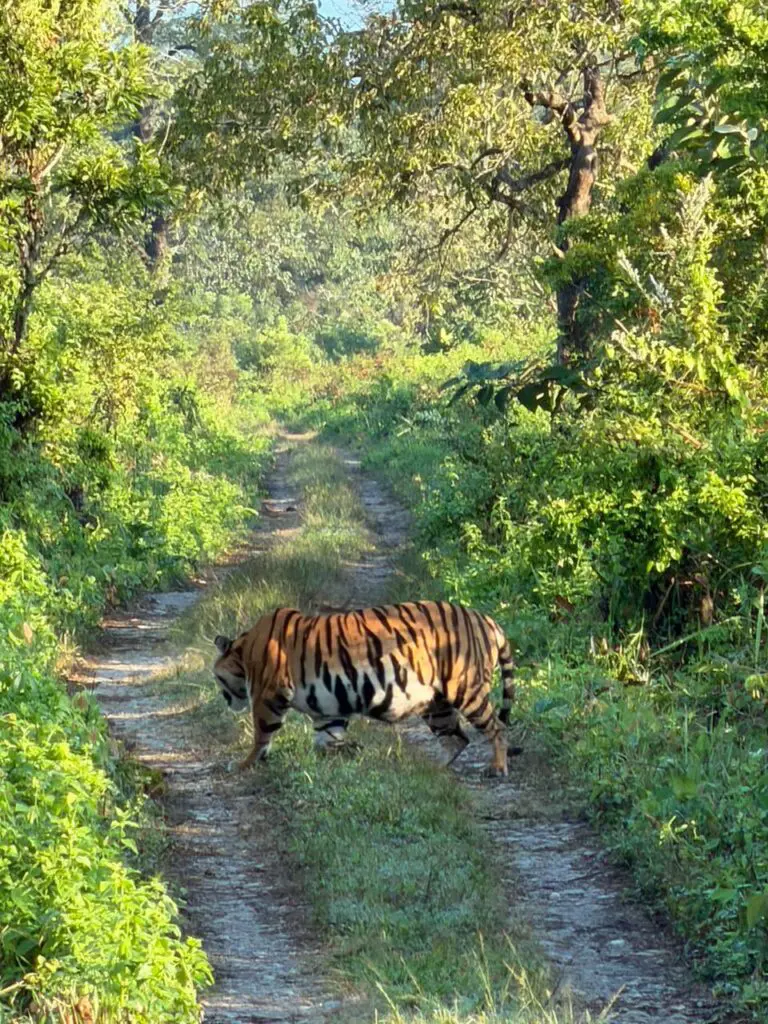
Nature camps changed everything for Panna Tiger Reserve. In 2009, the forest was silent — every tiger gone, every trace of trust erased. Locals had grown to resent the reserve, seeing it as a restriction, not a refuge. When the last tiger disappeared, many celebrated, believing the threat was gone. But that silence was the sound of a broken relationship between people and wilderness. What followed was one of India’s most remarkable recoveries — not just of animals, but of understanding.
The forest department launched the Panna Reintroduction Project with its nature camps, bringing tigers from other reserves. Yet the real turning point came from outside the cages and collars — from classrooms in the wild. The creation of nature camps, designed by field director R. Sreenivasa Murthy, began a new kind of conservation. It taught people to walk the same paths as wildlife, to listen, to track, and to value what had been lost. As reported by Mathrubhumi, these camps replaced hostility with pride, and turned villagers once indifferent to extinction into defenders of life.
From extinction to engagement
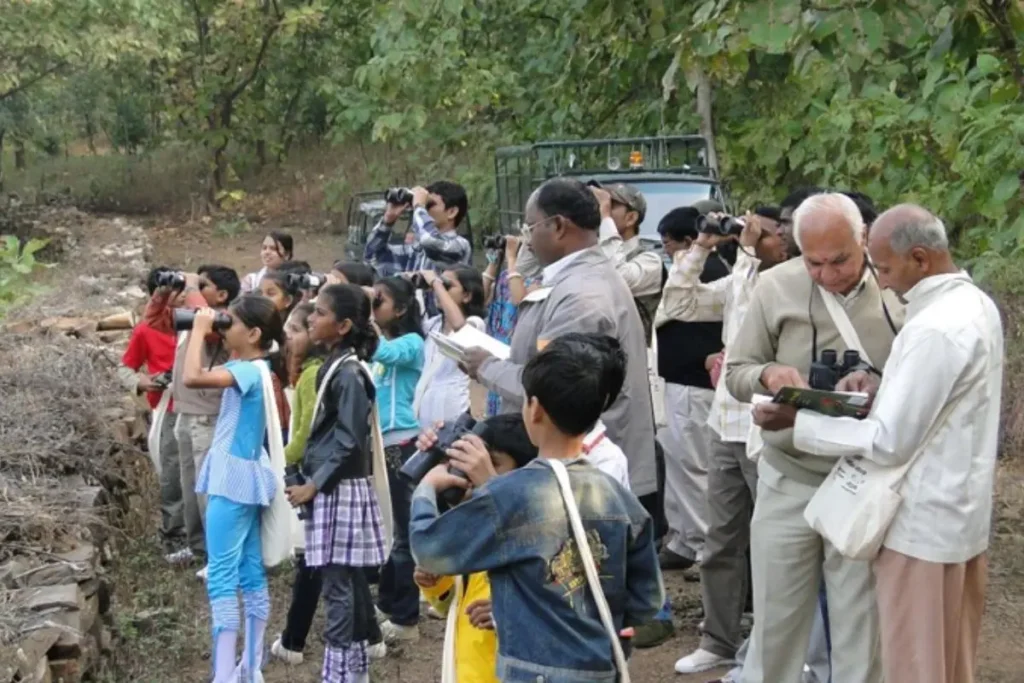
Launched on November 1, 2010, by then field director R. Sreenivasa Murthy, the Panna Nature Camps were designed not for tourists but for locals. At a time when resentment toward the forest department ran deep, Murthy understood that coexistence needed participation, not policing. The camps offered first-hand experiences inside the tiger reserve — morning briefings, jungle treks, animal tracking, storytelling, and ecological interpretation. Children paid ₹200 (≈US$2.40), adults ₹400 (≈US$4.80), and everyone left with a different kind of wealth: understanding.
These camps were not about recreation; they were about re-education. For people who had never seen the forest as anything more than a restriction, the experience transformed perception. The jungle became shared heritage. Tigers were no longer enemies; they were evidence of balance restored.
Education with nature camps as conservation
Fifteen years later, Panna’s story shows that coexistence cannot be commanded — it must be learned. Over 11,000 participants have attended 365 sessions so far, and what began as skepticism has become stewardship. Many villagers who once resented the tiger reserve now work as guides, drivers, or eco-tourism staff. The emotional transformation runs parallel to ecological success: from zero tigers in 2009 to over ninety today.
The nature camps function as conservation classrooms. They teach tracking, call identification, and the science of ecosystem relationships. They also cultivate something rarely mentioned in management plans — affection. Children who grew up attending camps now act as informal ambassadors, correcting myths and deterring poaching. Education has become the reserve’s most reliable patrol.
Rewriting the story of extinction
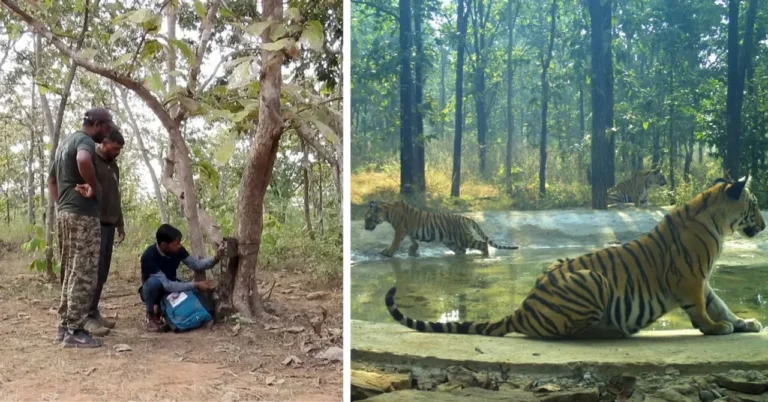
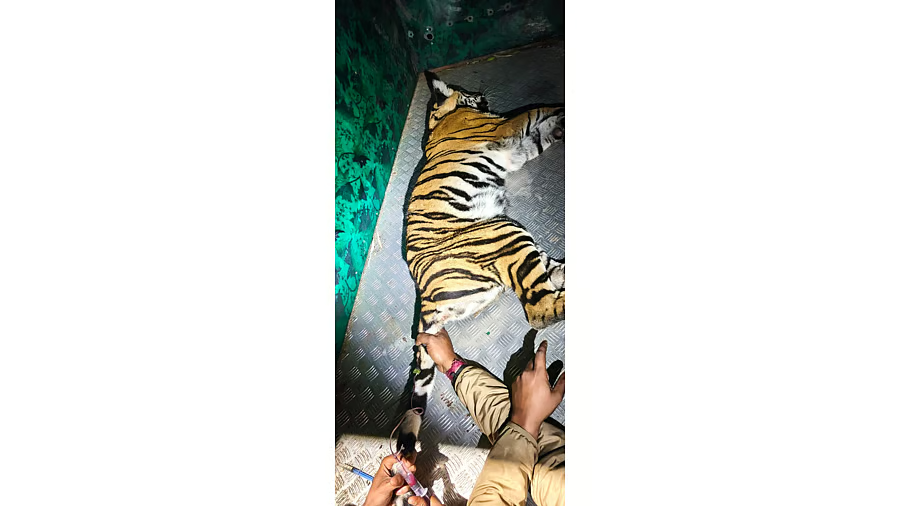
When Panna’s last tiger vanished in 2009, the event was a national scandal. The forest department was accused of negligence, and local resentment ran deep. Poaching networks had stripped the reserve bare, and the community, alienated by years of exclusion, felt no loss. Into this vacuum came the Panna Tiger Reintroduction Project — an audacious attempt to rebuild a population from zero. Tigers from Bandhavgarh and Kanha were translocated, radio-collared, and monitored around the clock. But while the numbers began to rise, success remained fragile. Tigers can be moved; trust cannot. Murthy’s team understood that if people did not believe in the forest’s value, any conservation effort would collapse again.
The creation of nature camps gave that scientific recovery a social backbone. Former poachers became guides. Villagers began to report illegal activities instead of hiding them. Tourism revenue, once resented, started circulating locally. Slowly, the narrative of loss shifted to one of participation. By 2025, Panna had more than ninety tigers, a thriving visitor base, and — most importantly — a public that had chosen protection over apathy. The revival of Panna proved that ecological restoration without social restoration is temporary, but together, they form permanence.
The bridge between conservation and coexistence
The triumph of Panna’s nature camps lies not in statistics but in philosophy. They redefined conservation as connection — people seeing themselves as part of the ecosystem, not its adversaries. This is the essence of conservation practices: building protection from understanding, not enforcement. When locals take pride in wildlife, fences become unnecessary.
Today, Panna stands as a reminder that saving tigers is not just about translocation or technology; it’s about rebuilding trust. The reintroduction project restored a population, but the nature camps restored belonging. No anti-poaching patrol can achieve what a child’s curiosity can — the instinct to protect what fascinates.
The success of Panna’s model demands replication. Every reserve in India battling distrust could host its own camp network. If India’s forests are to remain alive, conservation must move beyond control to communion. The story of Panna proves that the most powerful weapon against extinction is not a gun or a law — it’s education that lets people see the forest as their own reflection.
Source: Mathrubhumi English, India
Photo: Mathrubhumi English, India